


Indigenous people are some of the most impacted by mercury pollution. They’re more likely to live near the coal-fired power plants creating this pollution, and more likely to fish in waterways where this pollution ends up, raining down from the air into streams, lakes, and rivers. Many Tribal communities rely on locally caught fish, which could be contaminated with mercury, for their daily sustenance and for longstanding traditions that are central to their cultural identity.
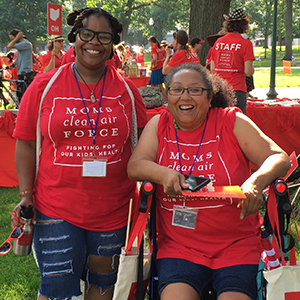
This Indigenous People’s Day, we’re revisiting three powerful interviews with Indigenous moms about toxic mercury pollution in their communities, rooted in the importance of fishing as a tradition. These interviews, with Great Grandmother Mary Lyons, Rachel Heaton, and Rachel Fernandez, were done six years ago, during the first Trump administration, as we were fighting then-EPA Administrator Andrew Wheeler’s efforts to undermine the Mercury and Air Toxics Standards for coal plants. Fast-forward six years, and we are regrettably in the exact same situation. We are currently regressing from progress made in those years.
Tell Congress: Support Increased Funding for Tribal Air Programs
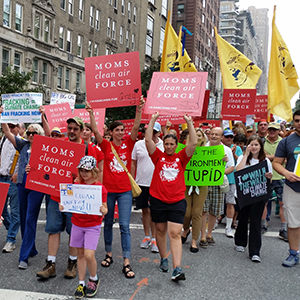
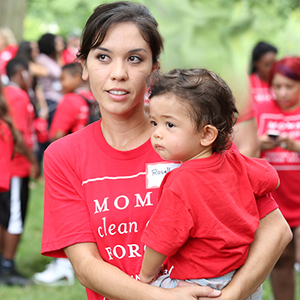
This summer, current EPA Administrator Lee Zeldin launched his POLLUTION SPREE with a proposal to roll back the strong mercury protections finalized in 2024. Moms across the country are speaking out, urging EPA to prioritize people’s health and well-being over polluters’ status quo. Coal plants should have to limit the mercury pollution from their smokestacks because exposure to this pollution can interfere with brain development and cause learning and behavioral problems in babies and children. It’s that simple. These three Indigenous women drive that point directly home—back to their food sources and their babies:
Great Grandmother Mary Lyons, Ojibwe / Anishinaabe
This issue of mercury pollution affects everybody. You cannot disturb something in Mother Earth that was never intended to be disturbed without having a consequence. When you violate a part of Mother Earth, there’s going to be repercussions.
In Minnesota, the land of 10,000 lakes, we are very concerned about the water and the fish. A lot of the Ojibwe are fishermen. We believe our forests are being contaminated through the traveling of impure air, and our ground is being poisoned through fracking and oil pollution. Our animals are coming into our backyards seeking out food because their homelands, the forest, are becoming toxic to them.
Through the dumping of waste and violating Mother Earth by cutting into her, we as humans are going to pay a much higher price with our health and way of life if we continue down this road. We as Anishinaabe people, we always took care of our residence, as we take care of it and it will take care of us.
Read more of Great Grandmother Mary Lyons’ interview.
Rachel Heaton, Muckleshoot
I live about 25 miles south of Seattle near my Tribe’s reservation in Auburn, Washington, which lies near and in the foothills of Mount Rainier. This is our ancestral land. We gather medicines out here, we harvest cedar trees, and we use the land for our cultural projects. Our reservation lies between two rivers, the White River and the Green River. Both are extremely important waterways to our community, and they help provide a way of life through gathering and fishing. We also fish out of the waters of Puget Sound along the shores of Seattle, and traditionally we used to fish along the Duwamish River.
Fishing is a huge part of who we are as Muckleshoot people. We eat the fish, honor it, and understand its role in our lives and this way of living. We live in coastal Salish territory which means that we are surrounded by water.
I don’t want to jeopardize my baby by exposing him to mercury. But fish has been our food source for thousands of years. As a mother who grew up learning the importance and health benefits that our fish provides, and then not being able to eat it, it does have an impact on your life. When my baby was born, I asked myself, “Do I feed this to him very often or do I not?” Having to be aware of these things is frustrating. I read that the average baby in the United States is born with 84 known chemicals in his body, and mercury is one of them. How do we start changing that?
Read more of Rachel Heaton’s interview.
Rachel Fernandez, Menominee
As water carriers and water protectors, we have a connection to our Mother Earth that is vital in the fight to save her. We need to be accountable to her and responsible for honoring her as we honor our ancestors for the struggles and suffering as they endured violence and genocide when colonization swept across our nations. That connection is intertwined as our way of life. We need to keep honoring our land, air, and water.
The entire state of Wisconsin is under a fish consumption advisory because of the high levels of mercury in our waterways. Not only is this detrimental for our state … but it also harms the 11 tribal nations here that depend on hunting, fishing and gathering.
Our fish are very important to provide sustenance and nourishment for the Menominee Nation, especially our sturgeon, which are vital to ceremony. In feasts for ceremonies, we need to make fish, wild rice, and meat consisting of wild game and berries. Clean water is vital and connected to all of these.
Read more of Rachel Fernandez’s interview.
Tell Congress: Support Increased Funding for Tribal Air Programs