This article is part of our series The Climate Questionnaire, where we talk with authors, writers, filmmakers, podcasters, and other content creators about their work illustrating the human impacts of air pollution and global warming.
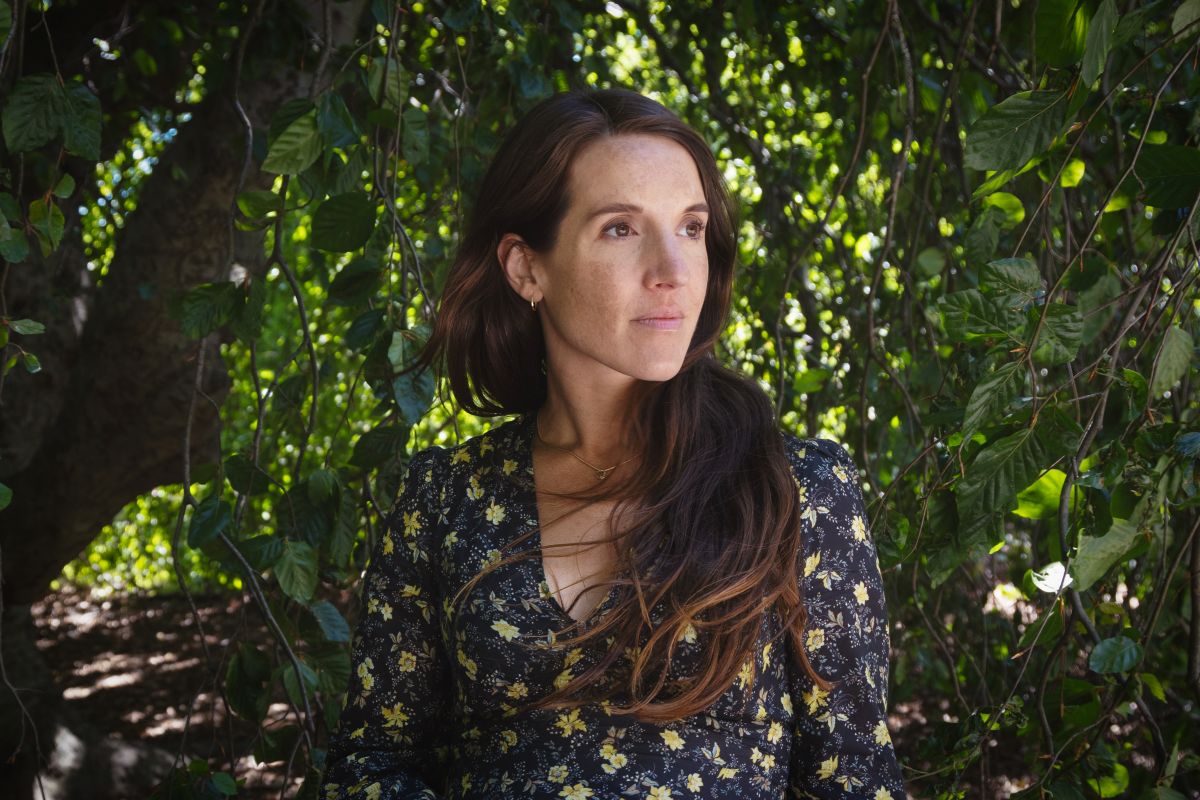
“It’s the most intimate story I’ve ever told,” says Nichole Sobecki, the award-winning photographer and director behind Natura, a photography series and documentary film following women on four continents navigating motherhood and unprecedented environmental change. Last month, Nichole’s photography of women navigating pregnancy and climate-supercharged extreme weather was published in National Geographic. This week, she joins Moms Clean Air Force’s Isabel González Whitaker at New York Climate Week for a September 22 panel about how the climate crisis is redefining motherhood.
Nichole has been documenting the intersection of climate change and reproductive life for 15 years. Natura is especially meaningful because she became a mother while making it. “The pregnant body is one of the most sensitive instruments we have for measuring a warming planet, and for so many people, climate change remains abstract, something happening elsewhere or later. A child is the most universal object of care there is. Start there, and the crisis stops being abstract,” she says.
Tell Congress: The Climate Clock Is Ticking. Act Now for Our Kids’ Future.
Read on to discover what Nichole learned from the women she followed for Natura, where she finds inspiration, and how she thinks about the changing planet.
What did you learn from working on Natura?
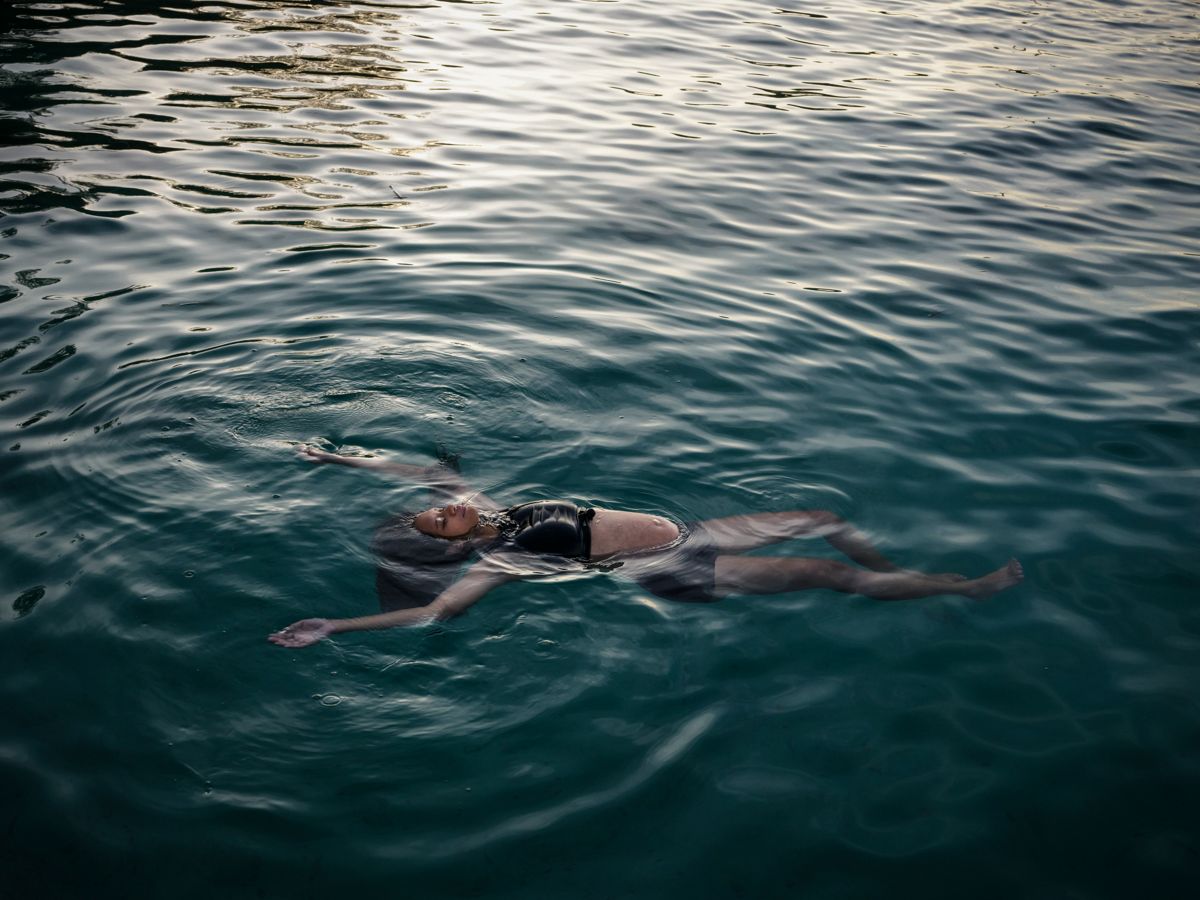
This story asked me to photograph something largely invisible: heat, and what it does inside a pregnancy, a question science itself is still racing to answer. In South Florida, I followed climate doulas, birth workers trained through Florida Clinicians for Climate Action, to assess heat and disaster risk for pregnant and postpartum clients.
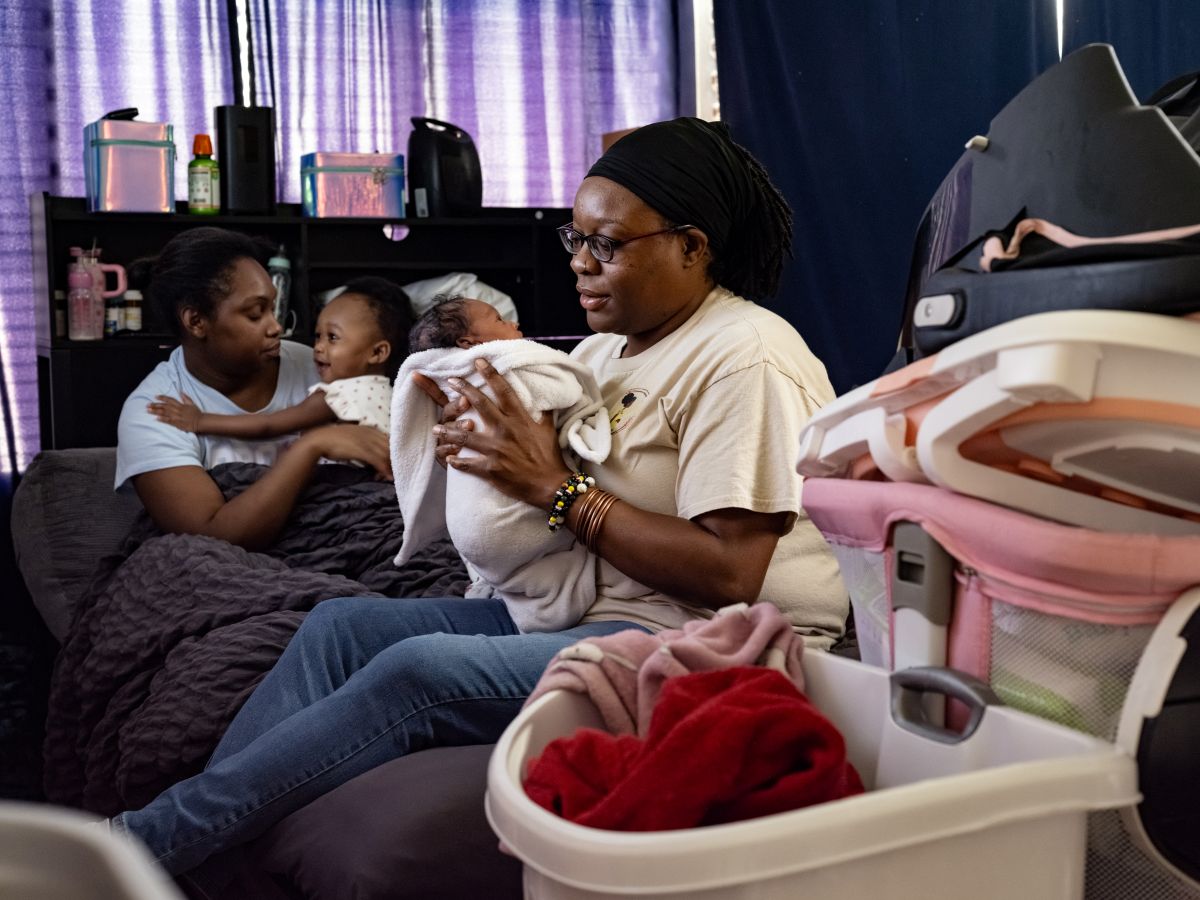
Miami-Dade County now averages more than 130 days a year above 90°F, and the burden falls unevenly: Black women in Florida die from pregnancy-related causes at roughly three times the rate of white women, and lower-income households are far less likely to have reliable cooling at home. So the images are quiet ones. A doula’s home visit. A window air-conditioning unit in the bedroom of a woman 29 weeks pregnant whose car’s air-conditioning had blown out.
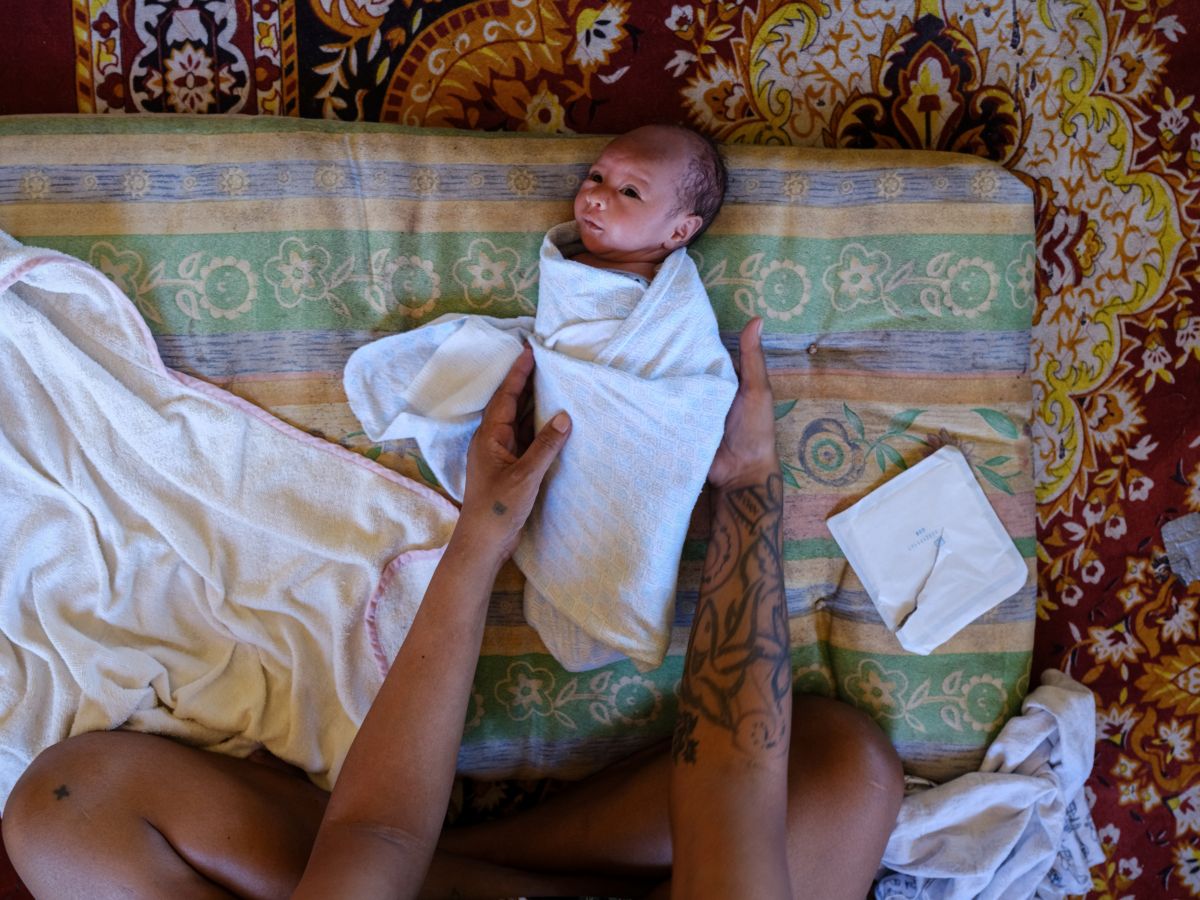
The story also took me to a climate chamber [a controlled indoor space used for testing reactions to environmental conditions] in Sydney, where researchers are searching for the threshold at which a pregnant body can no longer cool itself, and to Palau, the country with the world’s steepest rise in pregnancy heat-risk days.
What do you hope people will take away from your images?
The climate crisis is not only a story of ice sheets and emissions curves. It’s a story that lives in bedrooms and birth rooms, in the most intimate decisions of our lives. And the women closest to the risk—the mothers, midwives, doulas, and scientists in these photographs—are already doing the work of adaptation, long before policy arrives. Natura is meant to offer a quiet path through the enormity of our planet’s transformation.
Who are your favorite environmental photographers?
The photographers I return to aren’t environmental photographers in the traditional sense. Evgenia Arbugaeva, whose Arctic work feels like memory rather than reportage. Xavi Bou, who makes the flight of birds visible in ways no human eye could see. Jim Naughten and Tamara Dean, who both stage our entanglement with the natural world rather than simply documenting it.
And recently I was introduced to River Claure and Bade Fuwa, whose work feels fresh and exciting: Claure reimagining the Andes outside the colonial gaze, Fuwa turning loneliness into a way of seeing our abandonment of nature. All of them expand what an image of the natural world can be.
Do you call yourself an environmentalist?
I call myself a photographer, because my job is to look closely and report precisely, and I’ve found the facts of this crisis need no embellishment. But I don’t pretend neutrality about whether the world my son inherits is livable.
What’s your current state of mind when it comes to the climate crisis?
Clear-eyed and not despairing. I’ve spent years in the company of women who have every reason to give up and have chosen work instead: reclaiming forests, walking patrol routes with their daughters, setting good fire, gathering a generation to speak its fear aloud. The question I keep returning to is the one I now carry as a mother: what can we teach a child to love in a time like this? Love, it turns out, is the beginning of defense.
Who are your climate heroes in real life?
People who have contributed almost nothing to the emissions driving this crisis and who are already bearing the brunt of its danger and upheaval, an inequity set to grow steeper. What I’ve witnessed, again and again, is people meeting something grossly unfair not with bitterness but with imagination and care: reclaiming land, adapting old knowledge to new conditions, teaching their children both to love what remains and to fight for what can return. None of them would use the word hero, but all of them are keeping the world alive.
What book, past or present, best captures climate issues today?
I recently read Daisy Hildyard’s The Second Body, and it reshaped how I understand this crisis. She writes that every person has two bodies. The first moves through a day, eats breakfast, walks the dog. The second is distributed across the planet, present in the melting ice, the burning forest, the rising water. Climate change is so hard to hold because we live in the first body and cause harm through the second. Her thinking runs through the film I’m making now.
Tell Congress: The Climate Clock Is Ticking. Act Now for Our Kids’ Future.