


“Think globally, act locally” has never been more relevant. It has only been a few years since the largest-ever U.S. investment in climate solutions, but the political landscape has changed radically. At the federal level, a lot of that unprecedented hard-won progress on cutting air and climate pollution is being radically rolled back. Given this, many of us working on climate protections in this hostile environment are shifting our efforts to local fights. That’s because in statehouses across the country, climate is still a winning battle.
In a sea of bleak news, states remain one of the most powerful arenas for real climate action—and for concerned parents and impacted communities to be heard. If you’re not sure how to get involved locally, here’s a primer on how state legislatures work, and where your voice can make the biggest impact.
Tell Your Governor: Lead on Climate Safety
Why States Matter for Clean Air
Federal climate legislation of course sets the national agenda, but it is slow to implement and dependent on shifting political winds in DC. While state legislatures must act within federal frameworks, they have broad authority when it comes to everyday policies affecting energy use, buildings, transportation, and public health.
Because state legislatures are smaller and more accessible to constituents, local laws can achieve durable climate gains even when action at the federal level is stalled. This can have real impact—even beyond state lines.
Large states like California and New York have made headlines for recent climate gains, but advocates all across the country are also making progress. Take New Mexico. Last year the southwestern state created a Community Benefit Fund to invest $210 million in job growth and climate resilience, including $60 million for electric school bus infrastructure and maintenance.
“That was a big win for us,” says Moms’ New Mexico Field Organizer Giovanna Rossi. Now New Mexican advocates are pushing for The Clear Horizons Act—a long-term plan to cut carbon and methane pollution and strengthen the state economy—to be enacted before a new governor takes office next year. “This legislation has been shaped through several years of collaboration among legislators, community advocates, public health leaders, and families across New Mexico,” says Giovanna. Other states can follow suit.
From Idea to the Governor’s Desk
 Each state has different timelines for when bills are introduced, when they get passed, and when they actually take effect. In New Mexico, for example, advocates work year-round, but they have a very narrow window for action. Their state legislators are part-time volunteers and their regular session lasts just 30 days. In fact, only 10 state legislatures in the U.S. are full-time, and all except for Nebraska are bicameral, meaning they have two legislative chambers: Senate and House/Assembly.
Despite differences in legislative calendars and rules, the basic bill-to-law process looks mostly similar across the U.S.: First, a lawmaker develops an idea for a bill. Often, these ideas are brought to lawmakers by constituents, advocates, or industry groups. When the lawmaker has the details of a bill worked out, they send them to the state’s legislative services office, where nonpartisan staff attorneys write bill language. Once the bill is drafted, the lawmaker formally sponsors and submits the bill to the legislature. This is called “introducing” the bill.
The bill then gets a number and is assigned to one or more committees that have jurisdiction over its subject. The Clear Horizons Act in New Mexico, for example, was initially assigned to the Senate Conservation Committee, which handles environmental legislation. Committees debate and amend bills, and then vote on whether to send them to a floor vote by the whole chamber.
If the measure passes, it goes to the other chamber. The other chamber may amend the legislation further, in which case it would have to return to the original chamber for another vote. Once both bodies approve the same version of a bill, the governor decides whether to veto the legislation or sign it into law.
Committees: Where Bills Go to Live or Die
Only a fraction of introduced bills eventually become law. “People often think if the bill is good it should just pass, but even well-supported bills face procedural hurdles,” says Giovanna.
A crucial moment is the committee assignment, because referral to a committee with a chair who won’t prioritize the bill can stall it indefinitely. “Never underestimate the power of a committee chair,” says Rossi. They control whether the bill gets a hearing, how it is amended, and whether it moves forward.
Public testimony and outside pressure is key to success at this stage. People with relationships with committee staff can often make or break a bill. Well-funded industry lobbyists may have outsize access, but grassroots advocates can also help shape legislation by getting involved in the process.
How Storytelling Changes Votes
Throughout the legislative process, communicating the right messaging is critical to shoring up support and neutralizing opposition. You don’t need to be with an industry or advocacy group to do this. Interested community members can absolutely take action by sharing their personal experiences.
“The most impactful thing we can do is tell our stories,” says Giovanna. “The right data is important, but stories move decisions.” Personal details tend to move the needle, such as how your child with asthma can’t go out to play because of poor air quality.
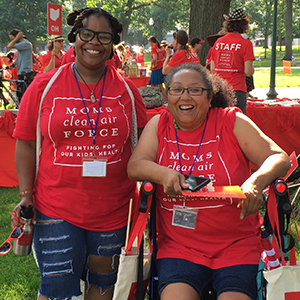
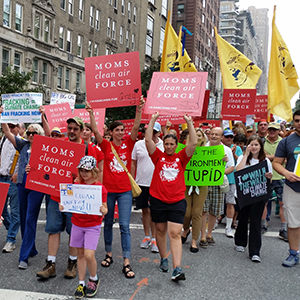
Giovanna spends much of her time in New Mexico educating and activating the state’s 20,000 Moms Clean Air Force members, helping them understand that “their voice actually really does matter.” In any state, parents and concerned community members can email legislators, make phone calls, write letters to the editor, and show up in person at the capitol.
Relationships, Relationships, Relationships
Trust, credibility, and long-term engagement are the heart of successful advocacy at the state level—wins often come after years engagement. So don’t get discouraged if you don’t see immediate progress.
Nurture relationships with other parents and caregivers, legislative staffers, and allies like health groups, educators, and youth advocates. Make sure your state representative and senator know your story. State legislators tend to be surprisingly accessible, especially compared to federal ones, and will pay attention to constituents who engage with them on issues they care about.
“It’s about being patient and persistent, because systems change doesn’t happen in one legislative session or one conversation,” says Giovanna. “It’s built through relationships and showing up year after year.”