

The underbellies of my feet used to burn as the heat emanating off the concrete gnawed through inches of thick rubber soles. I would run to avoid the pain. That was the only way to survive the summer Tucson heat: run.
My brother also used to run. He spent the mornings racing up and down our block, accompanied by his aide, running along his every stride. He’d loudly come home covered in sweat, out of breath, walking by the thermometer outside our front door whose red line never sank below the triple digits. This was five years ago, and temperatures are only continuing to rise, as more greenhouse gas pollution blankets the Earth, trapping in heat.
Tell EPA: Save the Greenhouse Gas Reporting Program
My mom would leave a glass of water on our dining room table, waiting to greet my brother when he returned. But one day, when I heard the door open, only his aide came through the door.
“Simon is in the hospital,” his aide whispered, “he collapsed on the run.”
They were prepared for their runs. When you live in Arizona, you have to be. Their routine helped regulate him; a life full of uncertainties created by his Autism diagnosis needed structure. He dutifully applied sunblock. He always had the right sneakers laced tight. They pre-hydrated and carried water on the run. They did everything they were supposed to. The heat doesn’t care.
Simon was rushed to the local hospital, where the emergency department, with a mix of adrenaline and their machines, managed to keep him tethered to life. He had multiple organ system failures. He suffered a stroke. He burned so severely that he needed skin grafts. Yet, I had to hear this all over the phone. Too young at 14, I was not allowed in the hospital. Stuck at home, I paced along the cool concrete floor of our house, afraid to venture into the heat.
The Tucson regional hospital did not have the resources for him. His case was too complicated, his symptoms too severe. Almost immediately, they flew him to the Phoenix Children’s Hospital. We packed in minutes and moved into a hotel 132 miles away from our home and five minutes from the hospital bed Simon lay in. We would be in that hotel for three and a half months. Our lives each a suitcase.
My parents were on 12-hour shifts at the hospital, as I started my first year of high school in a hotel room. Again, I was not allowed in the hospital. As if being 14 shielded me from the knowledge that my brother had been brutally dismantled by the heat. My parents shared what was going on day to day. The heat had been too much for him, cooking him inside and out. The doctors said it would’ve been too much for anyone.
Three and a half weeks into the start of school, on a sweltering August evening, we walked to the car on our way to the hospital. I remember the heat distinctly. I was surprised that it could still be so brutal after dark. As I ducked into the comfort of the cool car, the revelation hit me: I was going to see my brother. I was going to say goodbye.
They’d tried to prepare me. The doctor. My parents. They’d given me the rundown, the medical terms, the warnings. But nothing prepares you. His hair was longer. His body was thinner. His face looked more pale than I had remembered. He was propped up in the bed, a tube jammed into his mouth, electrodes strapped to his scalp, and IV tubing crisscrossing his body. His eyes were closed. I couldn’t look for long; I felt I needed to look forever. How could the heat do this to anyone?
The next morning, with the sun beating directly on the glass window, the team sat us down and explained the plan. In the coming days, we would transfer to a hospice house, where we could live as a family as my brother passed with dignity, surrounded by family and friends. They said this would be a better passing. I wasn’t sure that any passing could be better.
Instead, that evening, my brother’s eyes opened. And with a voice like an old, scratched record, worn, warped, barely audible, he said two words: “Hi, Mom.”
Now, I’m in my second year of college. Simon’s a senior in high school. The heat has left its mark on all of us. Not just the scars, though he has those too. His skin graft healed, but the outlines remain, reminders etched into the flesh. We have changed how we live. We prepare to go to battle with the heat. We wear wide-brimmed hats, we carry absurd jugs of water, and we plan our clothes with strategy. We avoid the heat like a predator. Because it is.
Simon doesn’t run anymore. He doesn’t even work in the heat. Not ever. There’s a risk, always a risk, that it could happen again. Another stroke. Another collapse. Another goodbye. My mother worries. Of course she does. She worries when any of us have to be outside for too long. The heat scares us. And fear, once it settles in, doesn’t leave.
Only two decades ago, around the year Simon was born, there were 64 extreme heat days in Tucson. Last year, there were 112. This year, there have already been 77, and our summer isn’t over. This isn’t about my mom or about Simon. It’s about all of us. The heat should scare you too. But it shouldn’t stop you.
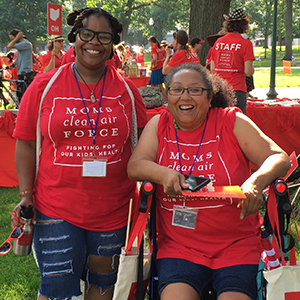
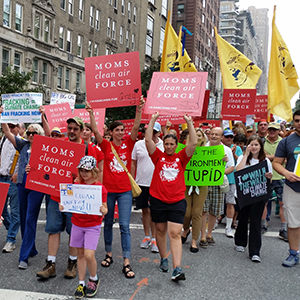
I’m learning how to channel my fear into action, advocating with Moms Clean Air Force to protect our climate, to protect kids like my brother. You can join us.