




This article was written by Moms’ Policy Intern Bobby Cook. It is part of our monthly series Mental Health and Climate Change, exploring how climate chaos can harm our emotional well-being and what families are doing to cope.
Over the last few years, artificial intelligence (AI) tools have become more and more embedded in our daily lives. But recent news reports have shed light on AI chatbots’ potential to harm our mental health. When individuals expect chatbots to give them advice, they can exacerbate existing issues, like feelings of isolation and anxiety, and act as a barrier to care.
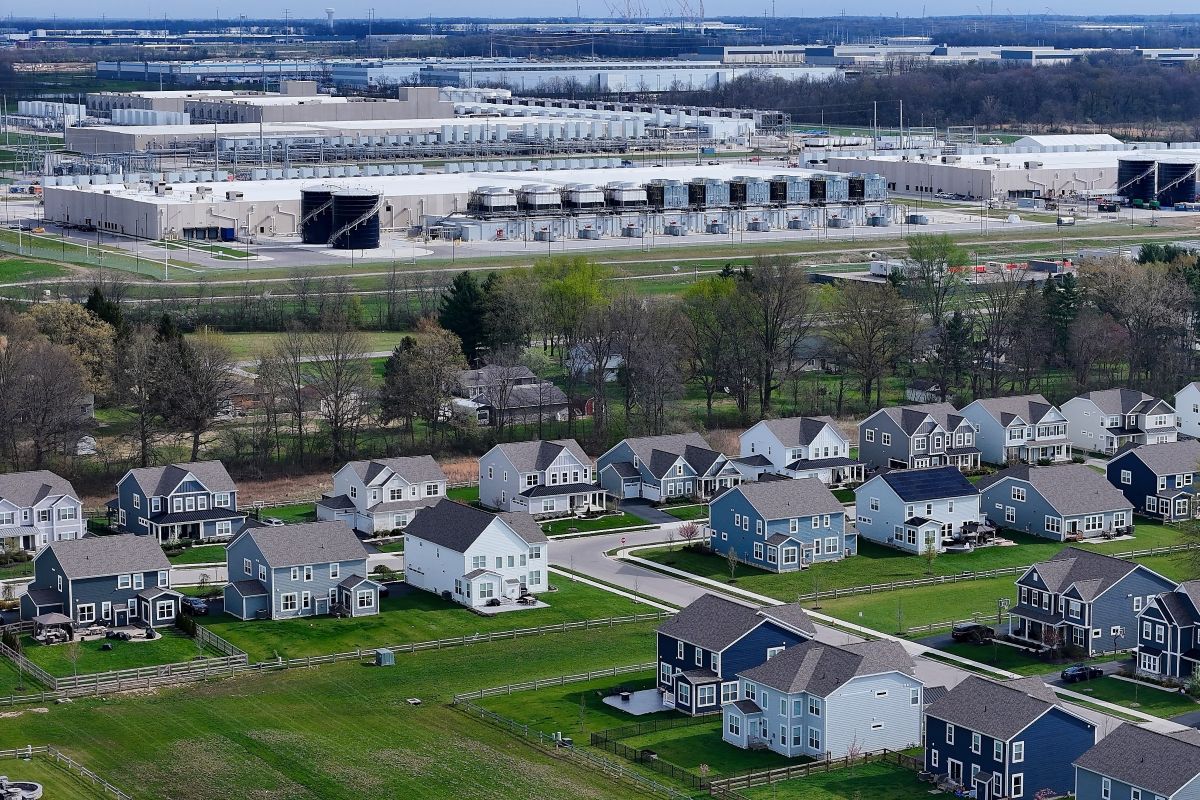
Unfortunately, this is not the only way AI can damage our mental well-being. Its impact on the environment we need to live safe and healthy lives is also causing psychological harm. As AI use increases, so too has the demand for new data centers, massive buildings holding the computers and servers needed to train, deploy, and run AI. Data centers powered by fossil fuels not only create air pollution; they also require massive amounts of energy and water to operate.
Tell Congress: Protect Families From Dangerous Data Center Air Pollution
Here are three ways the environmental effects of data centers can lead to depression, anxiety, and other mental health harms.
1. Data centers powered by fossil fuels create air pollution linked to anxiety and depression.
The typical AI data center uses as much electricity as 100,000 households, and the largest data centers can use 20 times more. Fossil fuel sources provide 56% of this massive amount of electricity. This means data centers are responsible for huge amounts of pollutants associated with burning fossil fuels, including soot (PM 2.5), sulfur dioxide (SO2), nitrogen dioxide (NO2), and nitrogen oxide (NOx).
Exposure to each of these pollutants has been connected to poor mental health outcomes. Soot exposure can increase depression and anxiety symptoms in adolescents. SO2 and NOx have been linked to anxiety and depressive disorders, and NO2 exposure correlates with higher rates of schizophrenia and bipolar disorder.
It’s even worse for people with asthma, who are more vulnerable to not only air pollution but also its mental health impacts. NO2 and soot can contribute to asthma in early life, as well as increased lung inflammation once asthma has developed. And people with asthma have a higher risk of mood and personality disorders, behavioral disorders, and substance abuse.
2. Water scarcity exacerbated by data centers can increase suicide risk, especially in farming communities.
Data centers require lots of water to properly cool their servers and computers. A midsize data center uses 300,000 gallons of water a day. This demand would increase strain on any water supply, but since 2022, two-thirds of data centers have been built in areas already suffering from water stress, making water issues there even worse. This strain on supply compounds water insecurity and drought in local communities.
Water insecurity can be devastating for mental health, leading to depression, stress, and anxiety. For farming communities that depend on water for crops, water insecurity can mean financial strain—and that financial strain can lead to depression. Suicide rates in farming communities have been found to increase during times of drought. Imagine if drought conditions were thanks to the new data center next door.
3. The data center explosion is yet another source of eco-anxiety.
The enormous impact fossil-fuel-powered data centers can have on our air, water, land, and climate can provoke feelings of eco-anxiety, or the overwhelming fear of environmental doom. Eco-anxiety has less to do with specific effects of data centers and more to do with the cumulative impacts—but the carbon pollution from data centers powered by fossil fuels is of particular concern. And not just for people living in a data center’s shadow; it can also impact those living far away. This is backed up by Dr. McKenna Parnes, an investigator at the Seattle Children’s Research Institute, who says she treats kids who are “not necessarily concerned about themselves but about others who will be impacted and the effects on future generations.”
One thing we know can help when climate emotions strike is taking action. If you are feeling anxious about new data centers popping up in your community and across the country, join Moms Clean Air Force in calling on Congress to invest in sustainable AI infrastructure with strong regulations to protect our health.
Tell Congress: Protect Families From Dangerous Data Center Air Pollution