

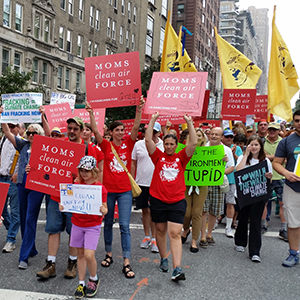
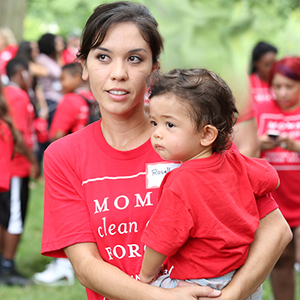


Climate Week and the New York City Climate March are over, but the actions of 75,000 protestors and the voices of environmental campaigners continue to resonate. I attended the New York Times “Climate Forward” event, one of several gatherings devoted to showcasing top speakers and ideas.
The requisite headliners, such as Bill Gates and Michael Bloomberg, were on hand. Of all the big names, Al Gore was the most on target. He didn’t hesitate to call out the fossil fuel sector, joking, “The fossil fuel industries speak with forked tongue.” Pointing out how Big Oil and Gas have copied the public relations methods of the Tobacco industry, he said, “Fossil fuels need to get out of the way. Last year, they spent 1 percent on strategies to transition.” Gore supports ongoing research but added, “There’s a big difference between exploring–and a license to continue operating.” Gore threw in another one-liner: “Mother Nature is staging an intervention!” Then he segued to the serious reflection, “This is the most difficult thing humankind has tried to accomplish.” He emphasized that it was “a moral hazard” to create the impression that the status quo could continue. In keeping with a global perspective, Gore said that developing countries “need to be included’ in the process and that existing obstacles impeding progress must be removed from their paths. When interviewer David Gelles asked Gore, “How do you explain the Republican opposition to solving the climate crisis?” Gore answered, “We have to address the democracy crisis.” He highlighted “dark money and pure greed” as being at the root of the problem and said that it was “distorting the political process.” Additionally, he noted, “The fossil fuels companies, given their record today, are far more effective at capturing politicians than they are at capturing emissions.”
Gore didn’t minimize the depth of the crisis but stressed, “We are building momentum. We have to resist climate despair.” He called on the audience to be proactive and said, “This is the moment for people power. We can do this.”
On the stage for “A Billion-Dollar War Against the Petrochemicals Industry”, Rev. Lennox Yearwood and Gina McCarthy were on the panel alongside Bloomberg. Yearwood spoke passionately about climate justice, sacrifice zones, and the vital work that women were doing on the frontlines. He reminded listeners that it has been 19 years since Hurricane Katrina, and children were still dying of asthma. He said, “We’re giving a death sentence to certain communities.”
McCarthy observed, “The planet will be okay. But the people won’t be.” She urged the necessity of “joining in a clean energy economy,” saying, “We’re contaminating our own people to get to the future.”
Topics covered included the sustainability revolution, regenerative agriculture, CO2 taxes, and how to channel money to struggling nations using “vulnerability” as a metric. Ajay Banja, President of the World Bank, made clear, “You can’t separate poverty and the climate crisis.” He focused on the inclusion of women and children as integral to solutions. “They don’t get a fair shake,” he said. Discussing the challenges to developing nations, he said, “A one size fits all doesn’t work.” He also commented on the “hypocrisy of the post-imperialist world.”
It was impressive to see a range of strong women leaders stepping up to name the problems at hand. Reema Nanavaty, director of the Self-Employed Women’s Association, described the impact of food and income insecurity on women. She gave examples of how extreme heat impacted the livelihoods of 87 percent of women workers, leaving 62 percent with food insecurity. Engaging feminist insights, Nanavaty offered the premise of women leading an “economy of nurturers,” and “greener slums” that incorporate clean cooking methods, kitchen gardens, and solar roofs.
Eleni Myrivili looked at the design of cities and called them “death traps.” She suggested that “nature be brought back” into urban settings through water and “canopies of urban forests.” She stated that heat is the number one killer due to concrete, asphalt, and glass. Myrivili gave three points to focus on: “Awareness, preparedness, and redesigning cities to be cooler.”
A fierce proponent of Environmental Justice and community engagement, Ebony Twilley Martin delivered one of the most critical remarks. She related how oil wells were visible from the windows of black and brown kids. She underscored, “The continuation of the harms perpetuated on us…the human impacts…80 million acres were sold in our sacrifice zones. Black and brown lives are still used as bargaining chips.“
What can individuals do? It was a rhetorical question posed repeatedly.
Making democracy alive and vibrant by engaging to change laws and policies that aren’t working was one response. Activism was designated as a “renewable resource.” A consensus of speakers reiterated the belief that the real solutions would emanate from the grassroots sector. And the time to act is now.
TELL EPA: PROTECT PEOPLE FROM TOXIC AIR POLLUTION RELEASED IN PLASTICS AND CHEMICAL MANUFACTURING