



Trump’s EPA is at it again gutting crucial clean air protections that safeguard people’s health. Earlier this month, the agency released a proposal to weaken tailpipe pollution standards for new heavy-duty diesel vehicles, like school buses and many kinds of delivery trucks. The inevitable result? More toxic exhaust harming our children’s developing lungs, brains, and immune systems.
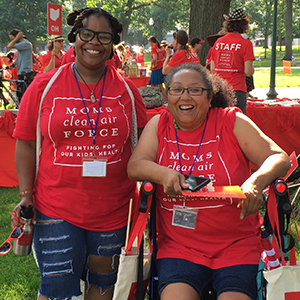
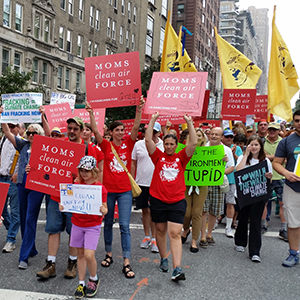
Moms do not want more exhaust. That’s why 14 of us from across the country showed up to testify at this week’s virtual EPA hearing about the proposed Clean Trucks rollback. Transportation pollution, especially from heavy-duty trucks, is one of the largest and most dangerous sources of emissions in the U.S. While heavy-duty trucks make up a small percentage of vehicles on the road, they produce a disproportionate share of nitrogen oxides (NOx) and diesel particulate matter—emissions that worsen asthma, heart disease, and respiratory illnesses, and increase cancer risk and neurological and developmental harms, especially among children and older adults. Why would anyone want to roll protection from this back?
Tell EPA: Protect Children From Toxic Truck Exhaust
This EPA’s insistence on clawing back clean air progress, and making it easier to get sick and harder to get well, is infuriating. Our collective outrage showed up in some of our most compelling and relatable testimonies:
Mary Wagner, Nevada
“For families like mine, tailpipe pollution isn’t an abstract issue—it’s our daily reality. Living so close to I-15 and US-95 means constant exposure to heavy traffic emissions. On high ozone days, we receive air quality warnings, outdoor activities are restricted, and my son’s asthma symptoms worsen. We’ve had days where we simply cannot let him play outside because the air is too dangerous to breathe. Cleaner vehicles would mean cleaner air for my family and for all Nevadans.”
Jayne Black, Wisconsin
“Poor air quality is already a serious problem in Wisconsin. The American Lung Association has given the Milwaukee-Racine-Waukesha metro area an F grade for both ground-level ozone and short-term soot pollution, ranking it among the worst in the nation. Transportation is a significant contributor of harmful air pollutants like nitrogen oxides, volatile organic compounds, and soot—all of which damage public health and well-being.
“I am a mother of four children, two of whom are directly impacted by NOx emissions from heavy-duty vehicles. My daughter, who has multiple sclerosis, experiences flare-ups and relapses triggered by pollution. My son suffers from asthma, which is exacerbated by tailpipe emissions. I worry that without strong protections, our children and future generations will face even greater health burdens from rising air pollution.”
Kindra Weid, Michigan
“As a nurse, I see the direct health impacts of tailpipe pollution exposure on members of my own community and even within my own household. My family lives along a busy roadway, and we breathe in daily harmful tailpipe pollution from heavy-duty vehicle traffic. This impacts my partner’s asthma, causing inflammation and irritation and flaring acute exacerbations. It causes headaches and nausea for me. I also witness these impacts on my community members in the local hospital where I work.
“Many older adults here have multiple chronic heart and lung conditions impacted by tailpipe pollution, such as coronary artery disease and chronic obstructive pulmonary disease (COPD). We also know that long-term exposure to pollution from tailpipes contributes to these chronic conditions forming in the first place.”
Patrice Tomcik, Pennsylvania
“Our school district campus (K-12) is located approximately 175 feet from the heavy-trafficked State Route 228. Studies have shown that the highest daytime exposures of traffic pollution are within 500 feet of a busy road. On an average day, at least 10,000 vehicles and 500 trucks and buses travel this heavily congested roadway. Closing school windows and doors can help lessen the traffic pollution exposures, but the reality is that NOx, fine particles, and vapors are able to readily penetrate the indoors, where they can be breathed in by young lungs.
“Both my children were exposed to this air pollution from kindergarten until high school graduation. I am concerned about the years of cumulative pollution exposure on their developing lungs—especially my youngest son who is a cancer survivor and is immune compromised.”