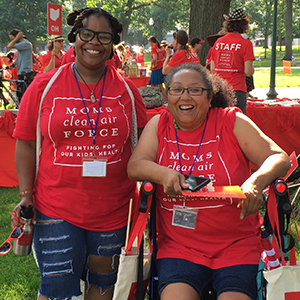

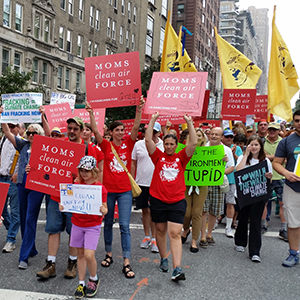

Each month, we highlight a Super Volunteer of the Month, a member who has gone above and beyond to advocate for clean air and children’s health. Our members in states across the country are more important than ever as we work to preserve clean air and climate protections. Will you join us?
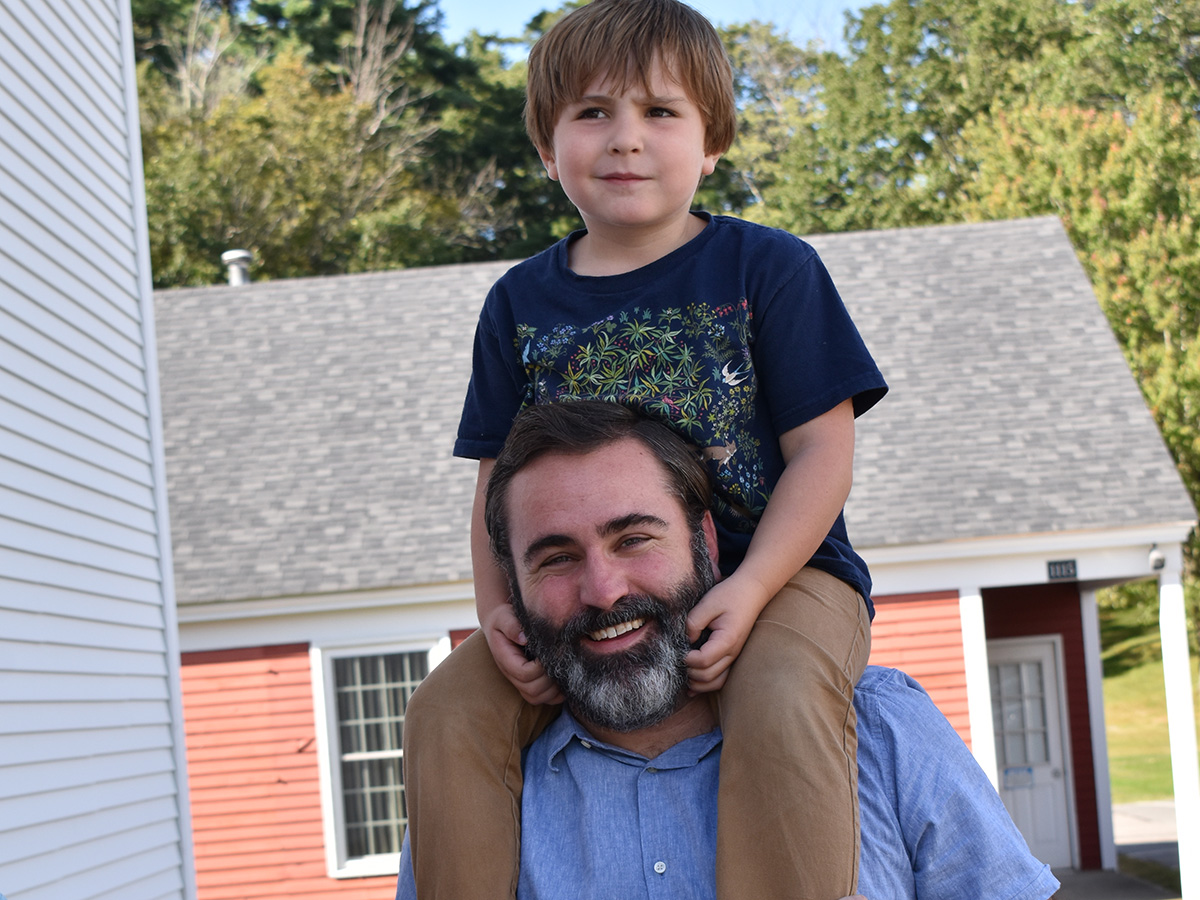
This month, we are celebrating James Finnegan, a dad and clean energy enthusiast living in Dublin, New Hampshire. James was nominated by his wife, Maria Finnegan, a National Field Manager for Moms.
In 2022, James helped form the Dublin Energy Committee, an all-volunteer municipal group that explores cleaner energy opportunities for the town. For their first project in 2023, the committee tackled some low-hanging fruit, signing Dublin on to Cheshire Community Power, a community choice aggregation plan that allows the town to buy electricity in bulk for participating households, keeping energy bills low and adding more renewable energy to the mix. The next year, they aimed their sights a little higher: a solar array on the local firehouse funded with federal Bipartisan Infrastructure Law money.
Tell Congress: Freezing Federal Funding Hurts Children
We asked James a few questions about his inspiration as a parent advocate and the success of the firehouse solar installation.
How did you first become interested in environmental and air quality issues?
We learned about environmental protection in the early 90s in elementary school. Back then, it was a far-off problem, but more recently, it’s become a ratcheting source of anxiety. Of course, when you have kids, it takes on a whole new meaning. What can I do to make things better? Not just for my son, not just so he can have a happy life. But so that he can feel like if he ever has children, they will have a secure future.
Did you have any environmental role models growing up?
I always looked up to my grandfather. He was an old-school New England Republican who wasn’t necessarily worried about the environment. But he liked efficiency. He worked at a plant in Fall River, Massachusetts, that created dyes for textile yarns. He would always come up with processes like recapturing the heat from the wastewater coming out of the plant and cycling it back through.
Tell me about the firehouse solar installation. Where did you even begin?
The local nonprofit Clean Energy NH brought the grant funding opportunity to us in mid-2024. We had already been thinking about what town-owned properties might be good candidates for solar. The firehouse was an obvious choice based on where it’s sited. It has great southern exposure to the sun, and it’s right on Main Street.
What was the process like?
First, we created a request for proposals, we solicited bids, and we chose our contractor. We worked with the Fire Department to write the grant proposal and submitted it to the New Hampshire Department of Energy, which had created a Municipal Solar Grant Program with Bipartisan Infrastructure Law money it had received from the U.S. Department of Energy. We were awarded the funds in November 2024, and then there was a little anxiety over whether the money would be there when the new administration came in. This motivated us to keep the project moving.
My main job once we were awarded the grant money was to quarterback the whole thing. I checked in with the installers, the person who administered the grant, the engineering firm that gave final project approval, and a firm that made sure we were complying with federal labor practices. As a volunteer, I was surprised at what it takes to do a project like this, but I don’t think the amount of work needed was an impossible obstacle.

When did it finally happen?
We got it up at the end of the summer 2025. Last month, we got final approval from the engineers, so we’re submitting for reimbursement right now, and it looks like the state has the money in the account.
We’re very happy we were able to get this done and use the funds in the Bipartisan Infrastructure Law for the purposes they were intended. Economically, it is a smart choice for the town. It’s already generating electricity, and we expect it to generate about 120% of the annual consumption of the fire station. So we’ll get to take that extra 20% and apply it to other utility bills that the town pays.
Were there any initial barriers to the project?
No. We had to set up a capital reserve fund and put a modest amount of money into it because we weren’t sure how much the grant funding was going to cover at that time. Nobody objected. We brought up both sides of the equation when we shared the plan with the town: we were excited that it was a renewable energy source, but also, it’s going to save the town X dollars over the service life. We didn’t have any problem getting it through.
Your son is young. Were you able to involve him in this project?
Yes, he wanted to know where Daddy was going every once in a while, and so I told him about the project. We’d drive by the fire station, and I’d say, “Hey, someday there’s going to be some solar panels up there.” He wasn’t too impressed. But he came to the ribbon-cutting ceremony after everything was installed. It was fun to show him the results and how other people were excited about it. And of course, he loves any chance he can get to run around a fire station.
What advice would you give to other dads who want to get involved in environmental advocacy?
You might not feel like you have time. You might get daunted by the size and the scale of the problem and feel like you can’t make an impact. Just find something small you can do. If everyone finds something small to do, the aggregate impact is going to make a difference.
Looking for ways to make your town more sustainable? Check out our new fact sheet: Smart and Sustainable Strategies for Any City.