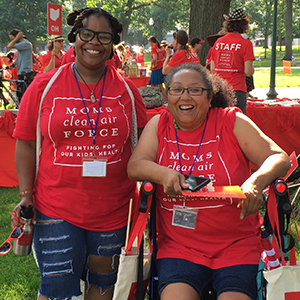

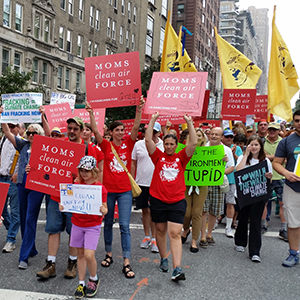
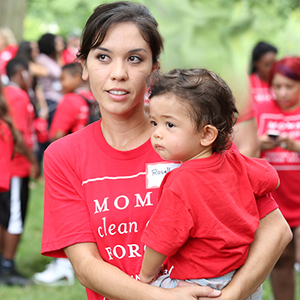


“When the air is bad, we can’t go outside to play,” Mason Wagner, second grader and Kids Clean Air Force member, wrote in testimony to EPA about their proposal to delay vital air pollution protections for cars and trucks. “My brother [who has asthma] has to stay inside so he doesn’t get sick. I feel sad when that happens because I want him to have fun with me.”
Mason prepared his testimony alongside dozens of Moms and kids from across the country who called out EPA for their latest effort to prioritize polluters over people’s health in this week’s public hearing. Strong tailpipe pollution protections finalized in 2024 were projected to prevent thousands of asthma attacks, save thousands of lives, and avoid billions in U.S. health care costs. Yet EPA wants to put implementation of these protections on hold for two years, meaning more dirty exhaust polluting our neighborhoods and our lungs.
Tell EPA: Families Can’t Afford to Delay Tailpipe Pollution Protections
The Trump EPA’s insistence on policies that, in essence, make it easier to get sick and harder to get well is maddening—and Moms have a lot of fury to unload. Here are some of our most compelling and relatable testimonies:
Barbara Weber, California
“I live in Santa Monica, a highly car-dependent city, less than a mile from the I-10 freeway. Last year, I lived through the devastating Los Angeles fires, when air quality reached dangerous levels for days on end. At times, ash fell from the sky like rain, and even indoors, the air burned my lungs and throat. That experience made it painfully clear how vulnerable our communities are when pollution accumulates—and how critical strong protections are when wildfire smoke compounds everyday vehicle emissions.”
Read Barbara’s full testimony.
Pita Juarez, Arizona
“I live just a mile from the I-10 freeway, a major interstate that stretches from California to Florida. The stretch of the 10 closest to where I live sees 300,000–400,000 cars per day. Tailpipe pollution is a very real threat for my community.
“My family has worked outdoors in Arizona’s sun and heat since immigrating to this country. My brothers spend long days outside, exposed to smog. My nieces and nephews play in this same air—air that too often fails to meet healthy standards. I worry about what their futures will look like if we don’t take stronger action now. The health-harming impacts of tailpipe pollution disproportionately impact communities like mine. We know that strong Clean Cars Standards markedly improve our air.”
Shaina Oliver, Colorado
“As an Indigenous community member living with asthma, I am at risk of asthma attacks, stroke, and premature death. My youngest son, who is now 11 years old, was diagnosed with asthma last year. Indigenous, Black, and Brown communities are at higher risk of asthma, diabetes, cancer, heart disease, leukemia, respiratory disease, adverse birth outcomes, and premature deaths than our white counterparts. Not to mention that when Indigenous families like mine leave the reservations we are redlined, segregated, or gentrified into areas with serious pollution problems. Because people of color are pushed to live near highways and industrial zoning areas that receive a hefty amount of traffic and particulate matter pollution, our communities—especially our children—face increased health risks.”
Kiya Stanford, Georgia
“Health impacts from exposure to tailpipe pollutants can range from respiratory illness like asthma to cognitive problems and even premature death. This hits home for me because as someone who attended primary and middle school next to major highways, I know the community-level impacts of exposure. At just five years old, my little brother was nearly hospitalized and put on a nebulizer from pneumonia after being seemingly healthy in the years prior. The only new factor was his environment: our elementary school nestled off I-285 and US 278 (Covington Highway).
“Asthma and other respiratory problems were something common among my peers during this time, and knowing what I know now, the commonality for all of us was our constant exposure to tailpipe pollutants each day when we went to school. Research shows that people of color, like me, have higher exposure to deadly soot. This is the case for many Title 1 Black and Brown students, and we need to do all we can to mitigate their exposure—not delay or weaken critical safeguards—so stories like my brother’s aren’t replicated.”
Elizabeth Bechard, Vermont
“As the mother of a child with a complex neuroimmune illness, I’m also especially concerned about the impact of air pollution on children’s immune systems and brains. Emerging research suggests that exposure to air pollution may be linked to increased risk of autoimmune diseases. And a recent study from the University of Finland suggests that traffic pollution may contribute to brain inflammation and neurodegenerative diseases by harming brain cells.
“When my son is in a flare of his illness, his brain becomes acutely inflamed, and we go to great lengths to protect him from anything that might make this inflammation worse, including exposure to unhealthy air. We live in Vermont, where tailpipe pollution isn’t our primary air pollution threat, but wildfire smoke is. I think often of families like ours whose medically complex children are exposed to unhealthy levels of traffic pollution on a daily basis.”
Read Elizabeth’s full testimony.
Tell EPA: Families Can’t Afford to Delay Tailpipe Pollution Protections