

This is part of Moms’ Call the Doctor series, where we peek behind the medical privacy curtain and get to know the people we entrust our health with, including their motivation, research, career goals, and daily work.
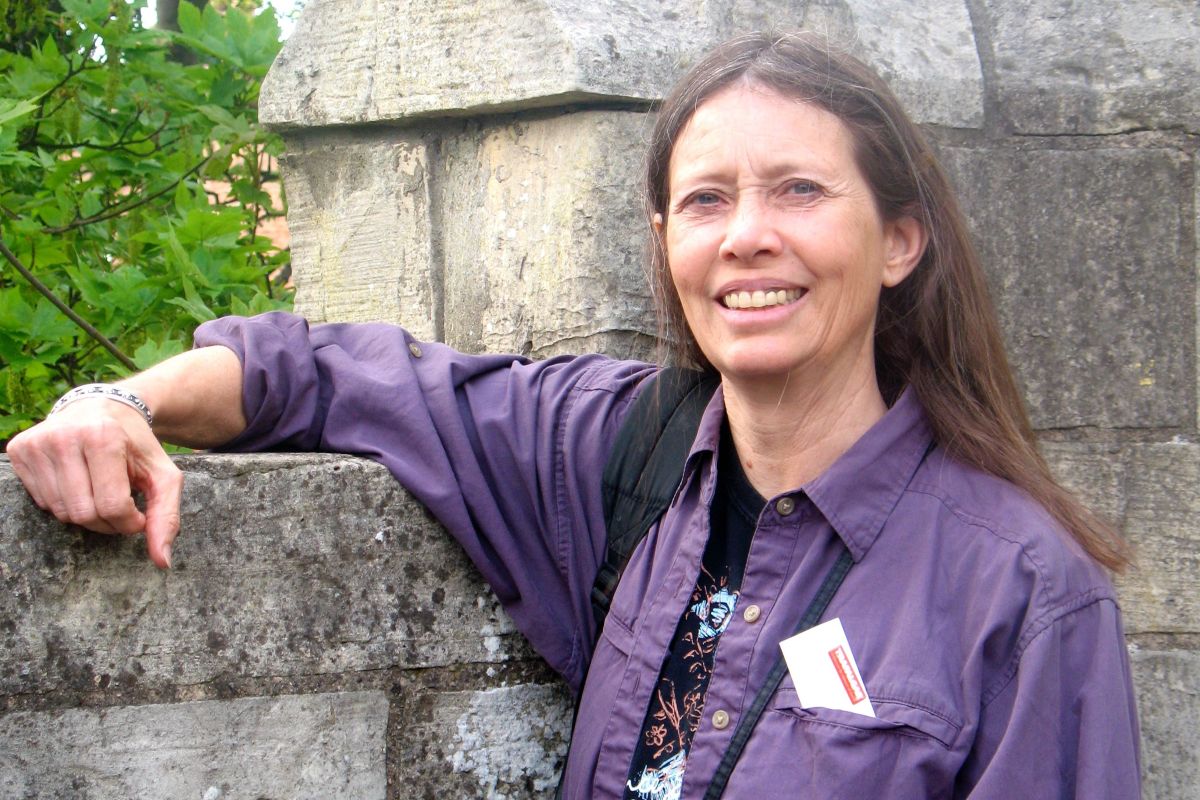
For 27 years, Lori Byron practiced pediatrics on the Crow Indian Reservation in Montana. Today, she works night shifts at a regional hospital to free up her days for climate work. It wasn’t until the tail end of her time with the Indian Health Service that she “came awake” to climate concerns, though she witnessed them firsthand, including wildfire smoke seasons, growing over time.
“That’s been so much more in the last decade than it was in almost my whole career. I certainly cared for a lot of kids that had illnesses that we now know are associated with poor air, for example, of course asthma, but also certain kinds of cancers and learning disabilities and pre-term births associated with dirty air or with heat events,” she says, referring to her decades on the Crow reservation.
Tell Congress: Support Mental Wellness Resources for Communities Facing Weather Disasters
From Indian Health Services to climate action
Dr. Byron chose to work for Indian Health Services because neither she nor her husband, Robert, wanted to do fee-for-service medicine. “I always thought I’d be a missionary, and he thought he’d be a small-town doc, so it was a pretty good combination,” she explains. No one at Crow, as she calls it, was specifically focused on climate during her time there, though; “people were in survival mode living on the reservation.”
These days, Dr. Byron and her husband advocate for climate action through several organizations. They co-lead the Citizens’ Climate Lobby Health Team, and she recently served on EPA’s Children’s Health Advisory Committee as well as the Executive Committee of the Environmental Health Council at the American Academy of Pediatrics (AAP). They also founded Montana Health Professionals for Healthy Climate seven years ago.
Climate and mental health
In her six 15-hour shifts a month at a local hospital, mental health is the biggest crisis Dr. Byron sees again and again. “I don’t ever go through a night shift without admitting a kid who’s attempted suicide. When you start talking to them about their stresses, some of the suicide attempts are being bullied or your partner breaking up with you, but a lot of it is just despair about the world,” she says. This includes climate anxiety and fear about the future.
Dr. Byron speaks mostly with her patients, but sometimes with their parents too. “A lot of the time they have absolutely no clue that this is a major factor in their kids’ mental health.” Dr. Byron says it’s terrible to witness how much worse youth mental health is today compared to when she started practicing pediatrics 35 years ago.
Her colleagues, compared to parents, are usually aware of youth mental angst and environmental concerns. “At the same time, a lot of people don’t know what resources there are available,” she notes. This is something she works to highlight at various meetings and especially at Montana Health Professionals for Healthy Climate’s yearly conference.
Encouraging action
“We really want to encourage people not just to know more, but to do more, which is a lot harder. We always have all of our speakers talk about solutions and about things you can do whether in the exam room or in public policy, that’s going to make a difference,” she says. This includes testifying in public meetings or before legislators on air pollution and climate change.
Dr. Byron also works to educate and connect to Montana communities via a variety of programs, including an art contest with the National Audubon Society and a program called Environmental Health in a Box with Boys and Girls Clubs across Montana. She’s always thinking up new educational opportunities. “We just started a program with neonatal intensive care units to provide HEPA filters in education to both the staff and then families when kids are going home,” she notes.
Funding, flags, and future work
Dr. Byron also spends a lot of time these days at her desk “living on the computer.” She’s answering emails, planning the annual conference, and especially, writing grants. Her climate work is funded by a variety of sources private and public. The Environmental Health in a Box program, for example, is funded by Pediatric Environmental Health Specialty Units. She was awarded her first EPA grant last January but lost it quickly after. “Or never saw it, I guess,” she notes.
Dr. Byron’s future plans include continuing a project that began with their first grant from the Academy of Pediatrics back in 2019: to increase the number of state sites with color-coded EPA air quality flags. These broadcast local air quality to the surrounding community. “Sometimes it’s clinics or libraries or even a fire department. But most of the time it’s schools that are flying the flags. And that’s actually really cool because it’s a way to show the community that you care, that the air affects our health,” she says. They currently have 70 sites they’ve set up with flags and flagpoles. If a site is in an area without air quality monitors, which Dr. Byron says is “most of Montana because we only have, like, 25 official monitors for the whole state,” they give them a low-cost commercial air monitor too.
The cure for despair
Dr. Byron says she is a firm believer that for most people, action is the antidote to despair. “That obviously doesn’t work for everybody. And that’s not what you can tell the suicidal kid who comes into the emergency room,” she says. But it works for her. And she wants to help everyone find a way to take action on climate that works for them too. For kids, she has so many ideas, from joining school-based green teams, to faith community environmental groups, to local 4H chapters. She adds, “Families can certainly help, by supporting kids and encouraging them.”
Tell Congress: Support Mental Wellness Resources for Communities Facing Weather Disasters