



With its vast public lands, the “Dark Skies” region of north-central Pennsylvania is a destination for stargazers, night photographers, and hikers. Now the fossil fuel industry wants to build the state’s first ammonia facility there, in Karthaus Township, a $2.3 billion plant proposed by KeyState Energy. The plant would dominate this remote area, home to a small village and about 800 people in total. This pristine spot in Pennsylvania is not alone. Dozens more ammonia facilities, all of which would release hazardous air pollution, are currently being proposed across the U.S.
While mostly known for its use in household cleaners, ammonia has a number of applications and products, from shipping fuel to explosives. This new ammonia production boom is being fueled by a global demand for its use to produce fuel and fertilizer. Ramping up production of ammonia will lead to increased air pollution and climate warming as well as serious health risks for neighbors in these communities.
Tell Congress: Protect Families From the Plastics and Petrochemical Industry
What is ammonia?
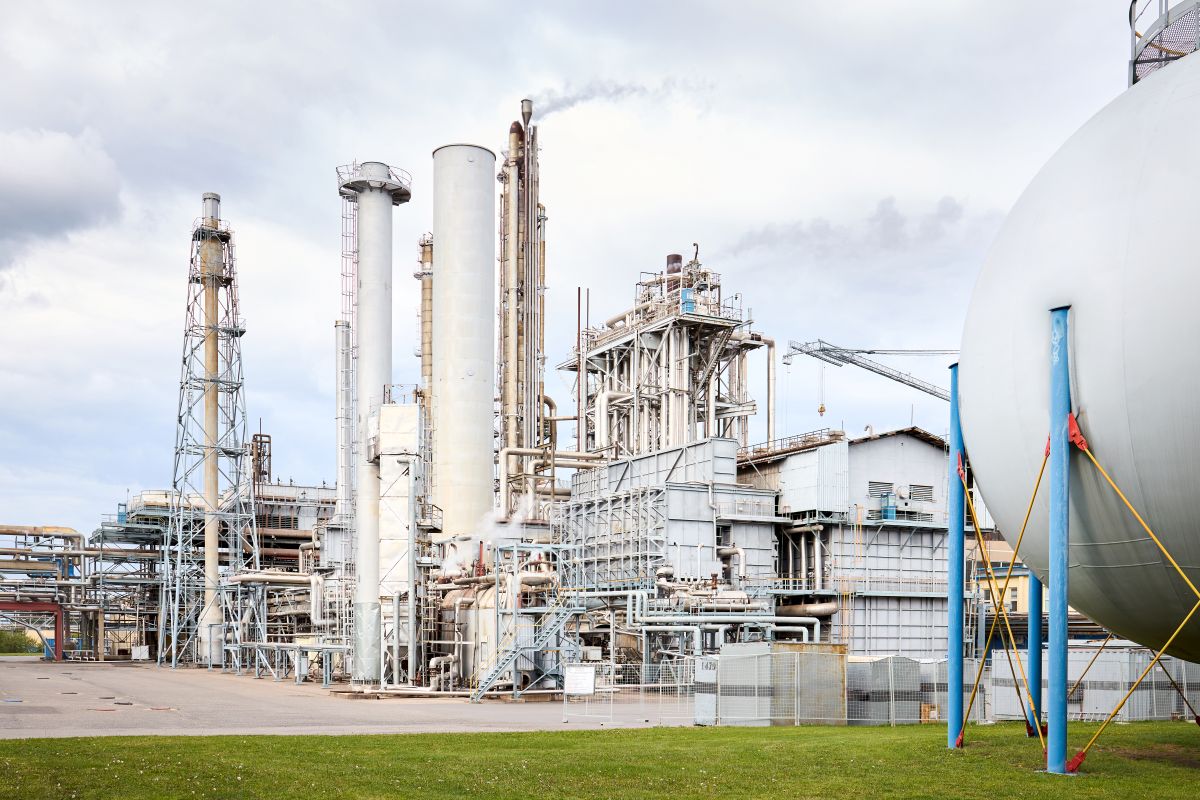
Large-scale manufacturing of ammonia uses fossil gas or coal, both as a feedstock and as an energy source. Under very high temperatures and pressures, producers combine hydrogen (stripped from methane gas) with nitrogen pulled from the air. The process produces almost 2% of global carbon dioxide. Ammonia has a strong smell, and the industrial facilities that make it can cause light pollution.
Anhydrous ammonia is compressed liquid ammonia gas without water. Growers inject it into the soil as fertilizer. It is extremely toxic, irritating the eyes, skin, and lungs, and can cause chemical burns as well as frostbite, as it needs to be stored at −28°F. “It targets any wet surfaces and pulls the water out of living tissue, causing a severe chemical burn on contact,” explains Cynthia Palmer, Moms Clean Air Force’s Senior Analyst on Petrochemicals.
Ammonium nitrate is another form. This solid or liquid fertilizer carries a major explosion risk.
Ammonia facilities also emit nitrogen oxides, formaldehyde, benzene, and PM2.5, the tiny particulate matter linked to asthma, heart disease, cancer, and neurological effects including dementia.
A tale of two facilities
The planned site in Karthaus is near farms as well as water sources for drinking and recreational purposes. “The site is three-quarters of a mile from the village, which we believe is really too close for safety,” says Rachel Meyer, Moms’ Ohio River Valley Field Organizer. Ammonia clouds caused by leaks can travel for miles depending on wind and weather. The plant would also require the construction of a new five-mile methane gas pipeline through hilly, landslide-prone territory. This gas supply is expected to last a few decades before it is depleted.
The project is in the pre-permit stage, so Rachel’s focus is on community education about the risks of an ammonia plant. “One good thing about this is that it’s in the early stages, and people are curious to find out more,” she says.
The people of Karthaus might look to their neighbors in Lima, a small city in northwest Ohio, where Nutrien operates the second-largest fossil-fuel fertilizer facility in the country, to learn how ammonia facilities can impact local communities. The Lima plant, which produces anhydrous ammonia, is situated in a petrochemical complex of several facilities, each permitted separately, and all close to historically marginalized, downwind neighborhoods. There are no air pollution monitors within three miles of the plants, so the people in nearby schools and daycare centers do not know how the facilities affect the air they—and their children—are breathing.
When the company applied to renew its permit in 2025, Cynthia joined forces with local groups and former EPA permitting experts to submit a 20-page technical comment letter demanding stronger clean air protections, with multiple community groups signing on in support. The state ultimately renewed the permit without addressing the inaccuracies, omissions, and discrepancies raised in the letter, so further public engagement will be critical. Communities have a right to speak out about facilities that could affect their health, hold decision-makers accountable, and keep pushing them to act.
When something goes wrong
Explosions and fires are a major concern at ammonia facilities. Cynthia cites a 2013 disaster at West Fertilizer Company in Texas as a cautionary tale to remember in the midst of today’s ammonia facility boom. An ammonium nitrate explosion left 15 dead, hundreds injured, and 500 buildings damaged. Four nearby schools were spared only because the incident happened in the evening. The Chemical Safety Board estimated that 10% to 40% of students and staff could have died if it had occurred during school hours. “It was just incredible luck that the schools were not in session,” she says.
In 2022, a fire at the North Carolina Winston Weaver fertilizer plant, which stores a lot of ammonium nitrate, burned for a week. The facility was in a neighborhood that was 80% people of color and 71% low-income, just one mile from Wake Forest University and near multiple daycare centers and schools. The fire engulfed the communities in toxic smoke and forced a large-scale evacuation.
What to do?
In addition to community education around the proposed Karthaus facility, Rachel and local organizers are focused on outreach to the Department of Environmental Protection, township supervisors, county commissioners, and state officials. They also connect Karthaus residents with people in Gulf South communities who have had similar facilities coming into their neighborhoods. “Ultimately, we’ll stand behind what the community wants. If the facility does move forward, then we’ll advocate for the best protections,” Rachel says. Those would include monitoring and reducing emissions and accountability in the permit itself.
Cynthia says that getting informed about ammonia is an important first step, both for anyone who learns of a plant planned in their community and those living near one already. But even finding out these facilities’ whereabouts is tricky, as there is so much secrecy. “There are nearly 14,000 facilities that store ammonium nitrate in the U.S., but community members are kept in the dark—the locations are not public.”
She’s calling for regulatory changes, especially given EPA’s exclusion of ammonium nitrate from the Risk Management Program’s chemical disaster rules and proposed federal rollback of public participation requirements for permitting. “These rule changes would make it easier for facilities to build or expand toxic and explosive ammonia facilities without health and safety protections,” Cynthia says. Coupled with the current ammonia production boom, that would increase the risk for everyone.
If an ammonia facility is being considered near you, check out our Ammonia Fact Sheet: Is Planned Ammonia Boom a Bust?
Tell Congress: Protect Families From the Plastics and Petrochemical Industry