
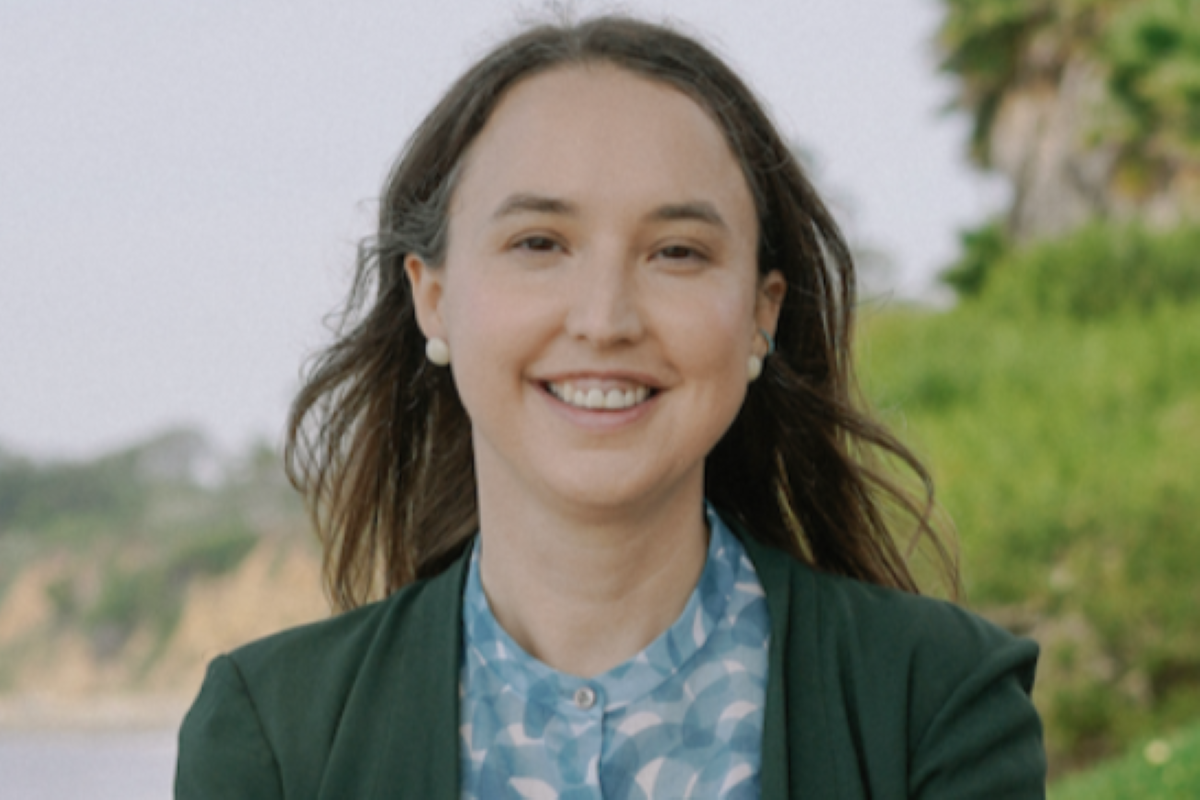
This article is part of our series The Climate Questionnaire, where we talk with authors, writers, filmmakers, podcasters, and other content creators about their work illustrating the human impacts of air pollution and global warming.
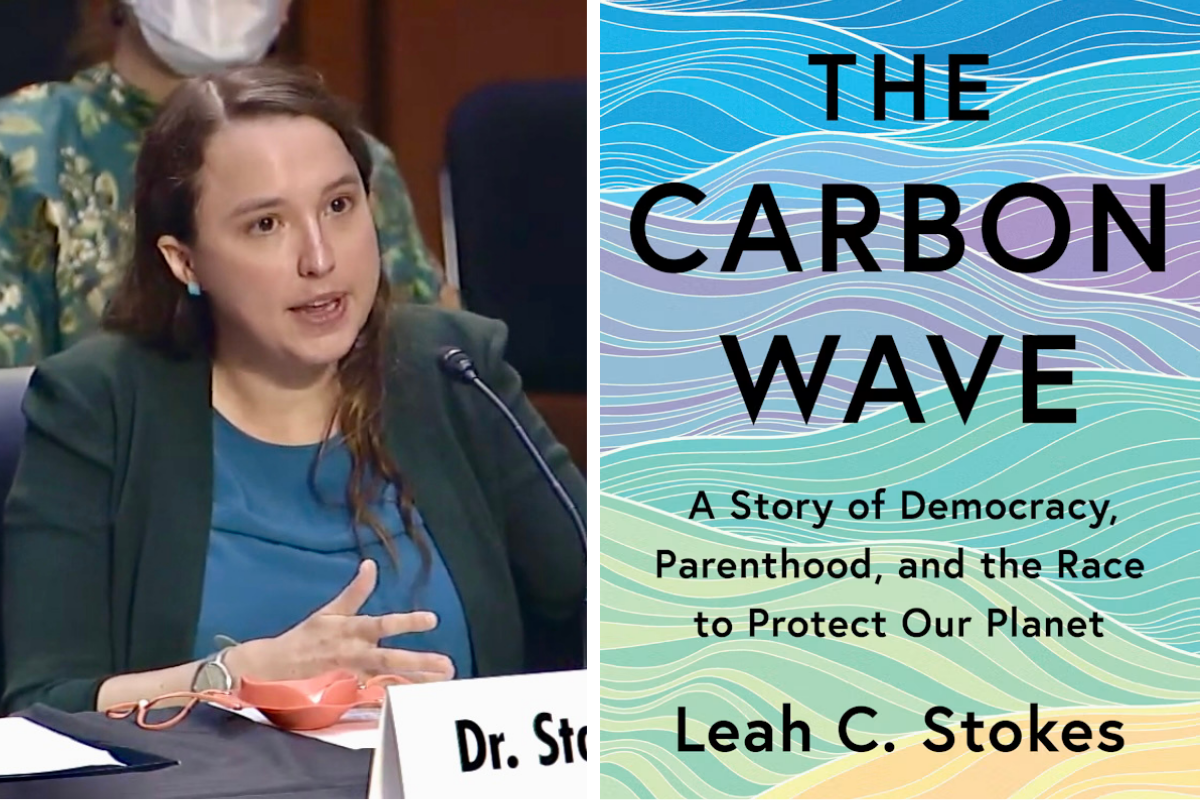
“I was having a strange high-risk pregnancy: gestating policy ideas and babies,” writes Leah C. Stokes, associate professor of environmental politics at UC Santa Barbara, in her new book The Carbon Wave, which came out on September 1. In it, she tells the story of how she birthed twin baby girls and helped shepherd the Inflation Reduction Act, once-in-a-generation legislation that invested $369 billion in cutting climate pollution, into law at the same time. It was a tumultuous span of months where “there were weeks when it looked like my future children might die, and the policy seemed destined to pass. And other weeks when I was sure the babies would live, and the policy would crumble.”
The book weaves personal narrative with stories from her legislative partners, policy wonk Sonia Aggarwal in the White House and DC insider Adrian Deveny in the Senate, plus other activists. It’s a deeply resonant tale of a new paradigm—the carbon wave—which measures what you can change with persistent advocacy alongside other people. Although many of the clean energy policies included in the Inflation Reduction Act were undone by Congress last year, the law set in motion a clean energy revolution that cannot be fully unraveled. Plus, there are the twins.
Tell Congress: The Climate Clock Is Ticking. Act Now for Our Kids’ Future.
Leah, who writes the newsletter Notes From the Electric Era and hosts the podcast A Matter of Degrees with climate leader Katharine Wilkinson, recently shared with us her perspective on advocacy, systems-level change, and hope for the future.
Do you consider your work on the Inflation Reduction Act your greatest climate achievement? If yes, why?
Yes, of course. This story shows that by changing policy, we can reach far beyond our own small footprints and transform much larger systems. To make that law a reality, I had to work alongside thousands of other people. But our shared victory drove more than 500 new factories across this country making solar panels, batteries, and electric vehicles. It helped put solar on people’s roofs. It helped communities get off coal. There’s a story in the book about a coal plant in Ohio, more than a century old, that is now shutting down and being replaced by solar and batteries, in part because of the Inflation Reduction Act. That is amazing.
What do you hope readers will take away from your book?
I hope the book inspires people to believe they are more powerful than they might think. For decades we’ve been told the answer to climate change is shrinking our carbon footprints—an idea the fossil fuel industry itself popularized, with BP spending millions advertising it. But it’s easy to fixate on the small changes in our daily lives and forget the systems and structures around us that we also have influence over. Those structures make far more of a difference when it comes to pollution.
I want people to believe they could electrify a school in their neighborhood, organize in their community to get a bike lane, or get themselves a heat pump or an electric vehicle. I want people to think about how much more powerful they can be if they join with others to create even bigger change.
What’s one thing you think everyone should know about climate advocacy?
That they are capable of changing the fossil-fuel-based energy system around us—and that waves form at every level. You can organize locally, where decisions about our schools and communities touch us most closely, or push your state lawmakers to fund school electrification. That’s how change happens.
Do you call yourself an environmentalist?
Yes. I feel deeply connected to our planet and to all living beings on it. In some ways, I feel like the earth itself has put me up to my activism. That’s a very grounded place to work from: when there’s so much noise in the human sphere—the politics, the opinions, the drama—you can connect back to your deepest ancestry with the ocean and the forests. When I ground my work there, I have much more certainty that what I’m doing is right, especially watching the boreal forest burn. That gives me deep clarity that climate activism is the most important thing I can be doing with my time right now.
Who are your favorite climate writers?
Rebecca Solnit, without question, including her newest book, The Beginning Comes After the End. My personal favorite from her is The Faraway Nearby, where she explores how we can make distant things feel close to our everyday lives. I think that is the real work climate writing can do.
What’s your current state of mind when it comes to the climate crisis?
The fires in Canada’s boreal forest this summer were heartbreaking for me. It’s a vast ecosystem, more than five times the size of Texas, and a place I love. But I also know we have the solutions we need today (heat pumps, electric vehicles, solar panels, batteries), and they are the cheapest, cleanest resources too. If we all do our part to replace the infrastructure in our homes, neighborhoods, communities, and states as fast as possible, we can get this done.
What does hope for the future mean to you?
I work every day for a livable planet, for my daughters, my nieces and nephews, my neighbors, and for the birds and trees and all living beings. Motherhood has connected me more deeply to all life. My daughters already show so much curiosity and care for the world around them, and I have hope because they will grow up knowing the people around them did all they could to protect it. As the saying goes: activism is the antidote to despair. So action gives me hope.
Tell Congress: The Climate Clock Is Ticking. Act Now for Our Kids’ Future.