

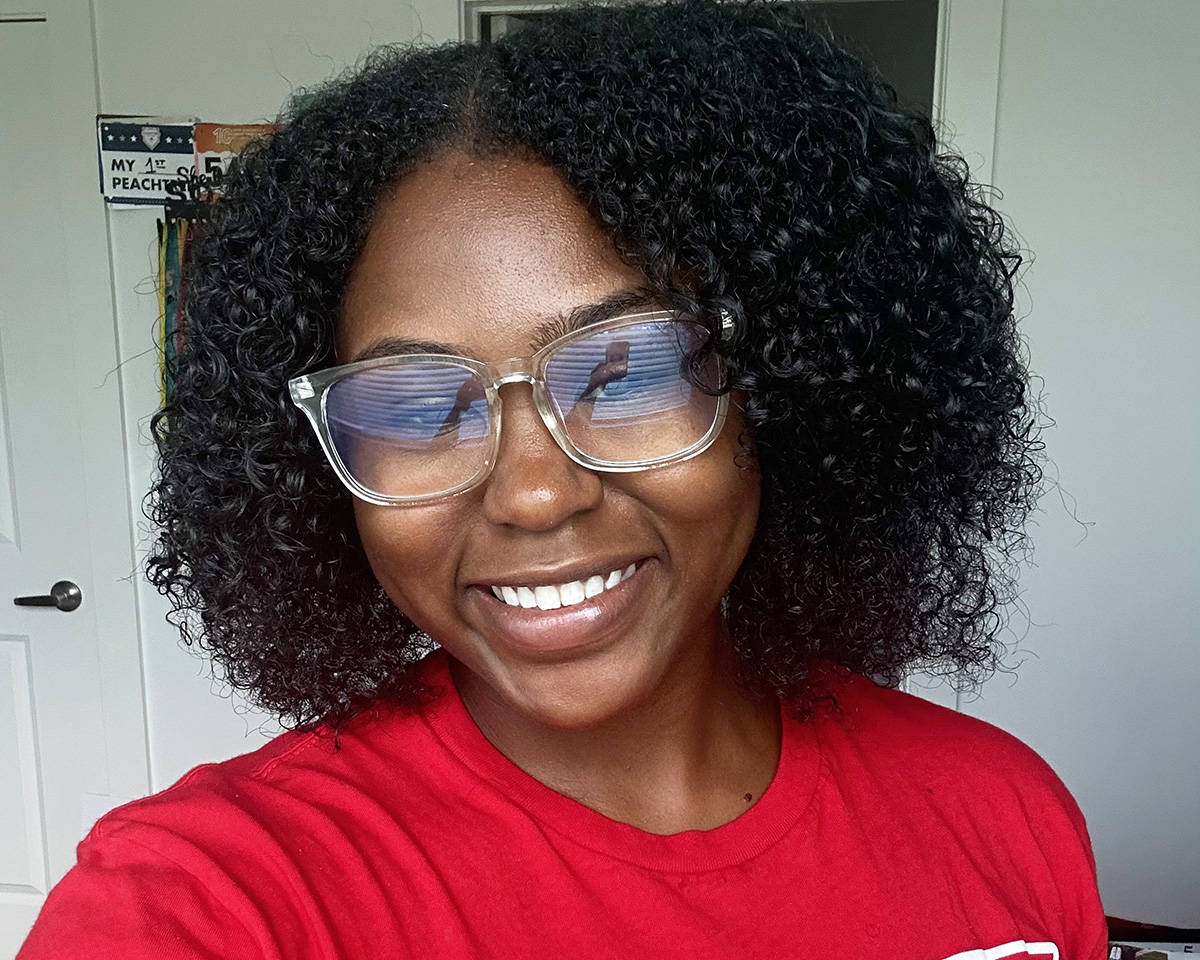
Earlier this month, dozens of Moms Clean Air Force members from across the country participated in a public hearing about EPA’s proposal to roll back the 2024 update to the Mercury and Air Toxics Standards, which limit mercury and other heavy metal emissions from coal-fired power plants. This was one of the first times Kiya Stanford, Moms’ Georgia Field Organizer, gave testimony before EPA, and here she shares her experience.
As told to Julie Kimmel by Kiya Stanford:
We only get one Earth, and we all share it. That’s how I think about it. The more I have learned about how all the policies that protect us from climate and air pollution are being upended by the Trump administration, the more frustrated I have become about the differences in thinking around this shared, finite resource. Not everyone thinks the way I do. So when the opportunity to give testimony before EPA arose, it was an easy decision.
Writing the testimony took about 45 minutes—not extremely long. I know from my Moms’ colleagues that personal stories make the most compelling testimonies. I do have a couple of underlying conditions that will be directly affected by the rollback of the Mercury and Air Toxic Standards if they are finalized, which is disturbing to consider, so I wrote about my own medical experiences. Just being able to put words behind how much worse it could get for me as a high-risk individual felt important.
Tell EPA: Moms Strongly Oppose Rolling Back Mercury and Air Toxics Standards
Joining the hearing could not be easier. I logged on from my computer at home and listened to testimonies for almost two hours before I spoke (you don’t have to log on as early as I did). I was happy to see the number of people also willing to show up, and it was really powerful listening to some of the stories, especially from people who shared their personal lived experience with real emotion. There were a couple of times listening to what people were saying that I thought, “Yeah, that’s a great point, and I feel that all of those things.” One woman from Kentucky stood out. She spoke passionately about how the proposed rollbacks were not only unnecessary, but also in direct opposition to the technologies and advancements the U.S. has seen in the clean energy space. It would be completely unjust and regressive to move forward with the rollbacks, she argued.
There were also people there who agreed with the rollbacks. I heard testimony from a woman with the National Mining Association that was disheartening, for example. She was more concerned with money over people’s well-being. I felt a myriad of emotions as I listened because of the range of people present. There was the stoicism of the three-person EPA panel (none of them ever reacted to or asked questions of the people testifying), the emotional charge of some of the people giving testimony, and the dismissiveness of people speaking for polluters.
My own testimony went well. I shared my experience with congenital heart disease and how exposure to mercury and other air toxics can pose significant risks to people like me. That was daunting because it required vulnerability. But I had to allow my story to speak for itself without caring about how it came across—because my truth could help the greater good.
Immediately after speaking, I felt a sense of relief for sure. It felt great knowing that I can be a part of this process, that I have the right to be a part of this process. My story matters. Because I decided to advocate for strong mercury pollution protections for power plants, my name will be stamped on the side of history that I want to be on.
While I’m not excited to give testimony again because it will mean we’re having to advocate against yet another rollback of vital clean air protections, I do know I will be ready. And the next time I testify, I won’t feel as mystified because I’ll have done it before. And I am excited to tell people who don’t already do this work that they have the right to advocate for things that they care about and, importantly, that it’s not as difficult as they may think it is. Anyone can share their story with EPA to try to make a positive difference for our shared Earth and the people who live here.
For anyone out there considering giving testimony before EPA, I would say be as authentic as possible. Yes, the science is clear and mentioning it helps, but storytelling is what appeals to most people. If you want to throw in some numbers and facts along the way, go ahead, but there’s nothing that compares to sharing your own real story and being honest about how EPA’s decisions will affect you, your family, and your community.
Join me! I can’t wait to see you at the next hearing. And if you’re reading this, curious, and want support in preparing testimony, don’t hesitate to get in touch.
Tell EPA: Moms Strongly Oppose Rolling Back Mercury and Air Toxics Standards