

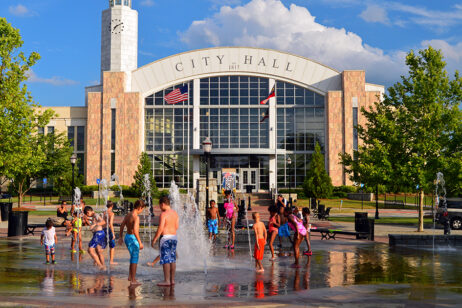
Existen muchas medidas que las personas pueden tomar en sus casas para adaptarse y manejar los impactos del cambio climático, tales como el calor extremo, las inundaciones y las sequías. El cambiar a fuentes de energía más limpias e instalar material aislante para reducir las necesidades de subir la calefacción o el aire acondicionado, marcan una diferencia significativa. Sin embargo, es cuando las ciudades adoptan estrategias sostenibles que el impacto se hace mucho mayor, ya que en ellas vive más del 80% de la población de los Estados Unidos.

Aulas más saludables
Guía de salud ambiental en las escuelas, para maestros, estudiantes, administración – ¡y también los padres de familia!

Extreme Weather and Youth Sports
Learn how extreme weather is adding dangers to youth sports and threatening young athletes with serious health risks.

The Climate Cost of Coal
Learn how coal fired power plants impact our planet and our health, from worsening global warming to increasing mercury and other pollution.

Smart and Sustainable Strategies for Any City
Find some sustainable strategies cities can adopt to help mitigate the impacts of climate change, like extreme heat, flooding, and drought.

Electric School Buses for New Mexico
This resource has been factchecked by policy experts, using the latest scientific research. Find all our sources linked below. Why electric buses Kids who ride an electric bus get a cleaner, quieter, and healthier commute, while school districts save money on fuel …

Información general sobre el mercurio
Este recurso ha sido verificado por expertos en políticas, utilizando las últimas investigaciones científicas. Encuentre todas nuestras fuentes en los enlaces a continuación. ¿Qué es el mercurio? Si bien el mercurio es un elemento natural, este metal pesado es altamente tóxico y …

Indigenous People, Air Pollution, and Climate Change
Indigenous communities are negatively impacted by industries, pipelines, mines, and waste incinerators that poison their land, air, and water.

Protections Against Toxic Chemicals Are at Risk
Learn how chemical industry lobbyists are pushing to weaken the laws that protect us from newly developed toxic chemicals.

AI, Data Centers, and Air Pollution
Learn more about AI and how data centers create climate and air pollution problems, require extensive water use, and cover a lot of land.

Microplastics 101
Microplastics are tiny particles of different kinds of plastic that come from many sources. At less than five millimeters in size, most are jagged with sharp edges and are too small to see. It is the smallest ones that are the most dangerous since they can penetrate cell membranes, induce inflammation, and disrupt metabolic processes. The tiniest of plastic fragments, called nanoplastics, are smaller than one micron, cannot be expelled by the body, and are far more abundant and dangerous than the larger microplastics.

Seven of the World’s Most Toxic Air Pollutants
Senators voted to turn off pollution controls. Now it is up to the House.On May 1, 2025, 52 Senators voted to repeal Clean Air Act protections against seven of the world’s most toxic air pollutants, including dioxins, PCBs, lead, and mercury. Now the resolution heads to the House of Representatives for a vote. If it passes the House, the resolution would allow 1,800 of the nation’s largest industrial polluters, including chemical manufacturers, pesticide makers, refineries, and other large facilities, to permanently shut off their pollution controls for the most potent carcinogens and toxic chemicals. These air pollutants cause cancers, birth defects, and children’s developmental disorders.