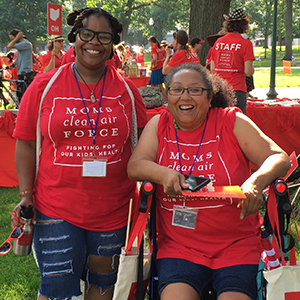

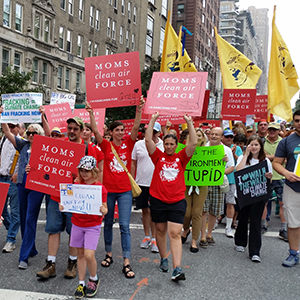

EcoMadres’ 2nd Annual Summit, From Heat to Hope—Forging Climate Solutions Through Community, took place in Las Vegas on September 12. Parents, health experts, policymakers, advocates, and community leaders came together to spotlight how global warming, extreme heat, and rising costs are putting a strain on families’ health and wallets and to highlight clean energy solutions that lower electricity bills and pollution. The summit, a bilingual gathering made possible through official interpretation services by Anabel Granados, was a call to action and a celebration of cultural resilience.
Tell Administrator Zeldin: Cutting Climate Pollution Is Essential for Our Families’ Health
Record-breaking heat, polluted air, and decade-high power bills hit Nevada families particularly hard. For many local Latino households, that means making impossible choices: Groceries or electricity? Keeping children indoors to avoid asthma flareups, or risking unsafe heat exposure?
Here are five powerful takeaways from EcoMadres’ second annual summit.

1. Extreme heat harms maternal health.
“Pregnancy is supposed to be a joyous time of life, but heat can make it dangerous, raising the risk of serious complications for moms and long-term health problems for babies. But families can always choose to act: from afforestation to pushing to decarbonize schools, there’s always a concrete action to improve things.” —Dr. Debra Hendrickson, pediatrician, author, and associate clinical professor.
Reno, where Dr. Hendrickson practices, is the fastest-warming city in the United States, having warmed seven degrees over the last five decades, far above the national average of two degrees. Economically disadvantaged neighborhoods, where many Latino communities reside, experience higher heat and pollution, putting pregnant women at serious risk. Heat increases the likelihood of life-threatening complications, including hypertension, heart attack, stroke, gestational diabetes, and placental abruption. Exposure in utero can lead to prematurity, low birth weight, and lifelong risks such as cardiovascular disease and diabetes. Dr. Hendrickson emphasizes hope and action: families can take meaningful steps to protect themselves and their children.

2. Latinos face compounded impacts.
“What’s the solution? Local clean energy that has a stable fuel cost, and that fuel cost is zero. It’s using the sunshine we’ve got every day to power us.” —Nevada Assemblymember Howard Watts.
In Nevada, rising temperatures and rising utility costs are compounding risks for Latino communities. Dr. Joanne Leovy, physician and Founder of Nevada Clinicians for Climate Action, highlighted that “every heat death is preventable,” noting that outdoor workers face kidney disease, disrupted sleep, and mental health challenges.
At the same time, children experience learning difficulties and limited outdoor play. Mary Wagner, EcoMadres’ Nevada Field Organizer, shared how families also struggle to balance utility bills with food and medication, saying, “When people are talking about their utility bills, we also want to talk about solutions… There are things we can do together as community members.”
Assemblymember Watts described this financial strain as a “hidden tax” but emphasized cleaner energy as a solution, stressing that solar and local renewable power can provide stability and relief. By combining clean energy, tree cover, and resilient community design, families can protect their health and reduce energy burdens, turning a crisis into an opportunity for collective action.

3. Plastics pollution threatens Latino health.
“Advanced recycling is a false solution. We cannot recycle our way out of the plastics crisis. Highly polluting emissions from these facilities will increase the threat of climate change and put children and pregnant mothers at even greater risk.” —Amanda Rowoldt, EcoMadres’ Ohio Field Organizer
Plastics are not only choking our environment but also threatening public health, from cancer risks to respiratory illness and from maternal health to children’s well-being. Panelist Amanda Rowoldt, a Mexican-American mother and cancer survivor, shared her deeply personal story about how petrochemicals and plastics shape health outcomes and endanger the communities living closest to industrial facilities. She warned in particular against “advanced recycling,” which is being touted as a solution to plastic pollution but is anything but. “Advanced recycling” facilities, often sited in economically disadvantaged neighborhoods, essentially incinerate plastic and produce toxic ash and hazardous emissions.

4. Storytelling and music are forms of cultural resilience.
“Creating Climate Chisme was a way to reclaim spaces for myself and show other Latinos that our stories and cultures can be a superpower in addressing climate change.” —Isaias Hernández, environmentalist, educator, and creative
Climate Chisme, an event centered on Latinos in the climate space and organized by Isaias Hernández, demonstrates how storytelling and music can build resilience and strengthen Latino communities in the face of climate crises. Isaias explained that oral stories and cultural memories help connect generations and provide powerful tools for climate education. Flor Díaz, a student at the University of Nevada, agreed, emphasizing the importance of educating youth. She shared that “storytelling … is a form of being in community,” which encourages young people to connect with organizations and mentors to act.
Dr. Silvia González, Director of Research at UCLA’s Latino Policy and Politics Institute, reflected on how “chisme,” or gossip, functions as resource sharing, helping communities survive and thrive: “In difficult situations, reminding ourselves that we still have power … fills me with joy to see the next generation continue to hold that power. Pam Covarrubias, a speaker and podcaster, highlighted how embracing chisme strengthens cultural identity and dialogue: “I think chisme is so rooted in our culture that we just need to embrace it…[It] builds the connection in a way that people can understand.”

Live music from SonTierra, a multi-ethnic ensemble of Latino musicians, throughout the summit illustrated music’s unique power to build connection as well, showing how it can unify, share stories, and reinforce community identity. Through both storytelling and music, communities can honor their heritage while fostering climate action and resilience.

5. All of us can and should lead on climate action.
“We are the ones closest to the issues. What we really need is people power to pass legislation and fight for our communities.” —Jessica Ordóñez-Lancet, senior director for energy and environment campaigns, Center for American Progress
Assemblymember Cinthia Moore shared how Nevadans are buckling under rising utility costs, with average summer bills climbing from $700 last year to $800 this year. She urged everyday residents to see themselves as leaders and decision-makers. Audrey Peral, Program Director for Chispa Nevada, stressed that corporate monopolies stand in the way of solutions, and only organized community power can move legislation forward. Ordóñez-Lancet pushed national policymakers to ground their work in lived experience, reminding the audience that families know global warming and pollution firsthand.

In a powerful moment, EcoMadres presented the inaugural Clean Air Champion Award to Ana Gonzalez and her daughter, Jacky Banderas, whose nonprofit Las Doñas Academy uses education, advocacy, and music to empower Latino families across Nevada. Their recognition underscored a central theme of the summit: grassroots leadership is essential to protecting families and building a healthier future.
“Este triunfo, este trofeo, is the result of what we have been fighting for. As a mother, I am upset about everything happening with the climate. I have a daughter with allergies, and while we as adults can endure these challenges, our children, who are the future, do not deserve this terrible climate,” said Gonzalez, who is a member of the Las Dos de Sinaloa band, accepting the award.
Her daughter, Jacky Banderas, added: “All I am doing is following in my mother’s footsteps. I am the eldest, and just like her, my daughter is also doing the same. We are all in this struggle, and as mamás, I ask everyone to raise their voices. We need to be heard so that this fight brings something good in the future.”
Tell Administrator Zeldin: Cutting Climate Pollution Is Essential for Our Families’ Health