
My Climate Job is our series about careers in fields that fight climate disruption or are impacted by the climate crisis.
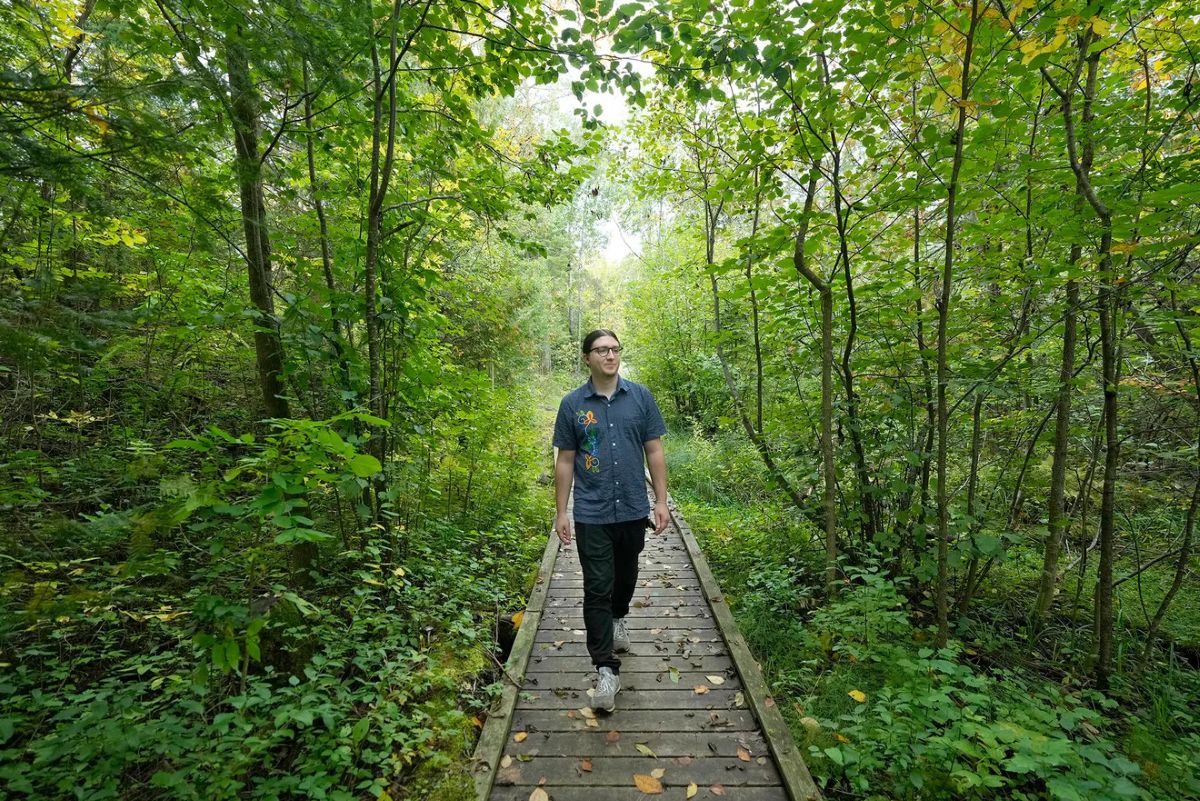
“From a young age, I knew that I wanted to help people learn about Native American culture and history,” says Bazile Minogiizhigaabo Panek, an enrolled member of the Red Cliff Band of Lake Superior Chippewa Reservation, in northern Wisconsin. Three years ago, he made good on this lifelong goal when he witnessed a gaping hole in understanding that he, uniquely, could help with.
He had graduated from Northern Michigan University with a bachelor’s degree in Native American Studies in 2022 and was working for an intertribal organization doing climate change work in Minnesota, Wisconsin, and Michigan. “That’s where I saw that climate and environmental organizations wanted to work with Tribes and understand Indigenous knowledge, but they simply didn’t know where to start or how to do so respectfully.”
He founded Good Sky Guidance, a consulting firm, to help organizations through that process. Clients range from environmental nonprofits, architecture and engineering firms, and colleges and universities to local, state, and federal governments—all interested in fostering meaningful relationships with Tribal communities and gaining deeper understanding of Indigenous knowledge. This work can take many different forms, from cultural awareness training programs, to collaboration on water quality testing, to ensuring scientific research on Tribal lands is mutually beneficial, to convening a transformative report on the Status of Tribes and Climate Change.
Tell Congress: The Climate Clock Is Ticking. Act Now for Our Kids’ Future.
Bazile admits the projects are not always easy but shares that the results are incredibly inspiring. He spoke with us about how his work is rooted in traditional ecological knowledge, what keeps him motivated when conflict arises, and what he has learned from realizing his childhood dream of bringing everyone to the table.
What is traditional ecological knowledge, and how do you use it in your work?
Traditional ecological knowledge (TEK) is a knowledge system about the environment that has been generated through thousands of years of experimentation and deep relationships with the land. Through centuries of observations, we as humans have learned to develop a reciprocal relationship with the land. We take care of the environment because it takes care of us. TEK could be as simple as elders sharing their memories of where blueberries used to grow or identifying a culturally significant site.
One of my best examples of the use of TEK is a meeting with some representatives from the U.S. Forest Service and Tribal members from a community in the Upper Peninsula of Michigan. We had this large map of a national forest out on the table, and the Forest Service employees were pointing to different spots on the map, discussing a prescribed burn project. Like, “Oh, we could do it here, we need to do this forest study or this assessment first”—things that would take a bunch of time and money.
But a Tribal member spoke up and pointed to the map: “This is where my grandma used to do burning.” That’s TEK right there—this knowledge that he holds of the history of Indigenous people’s use of the land. OK, let’s start there then.
In your work fostering relationships between Tribes and institutions, what challenges do you encounter?
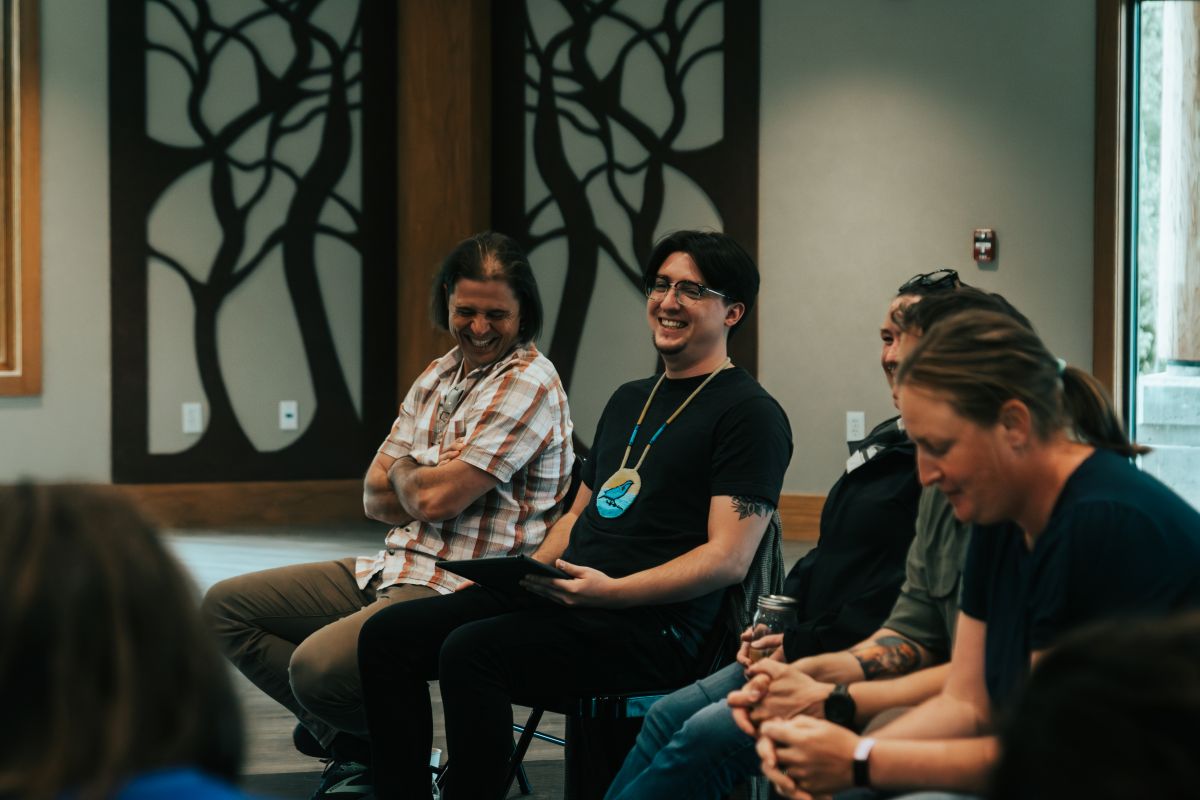
Tribal communities, rightfully so, have trust issues with outside institutions that want to engage with them. This is because of historically extractive relationships, maybe especially with researchers from academic institutions who have gone into Tribal communities, collected a bunch of data, and not shared it with the Tribes or even discussed how the data could benefit the Tribal community.
It can take a lot of time to build new relationships and identify shared values. Representatives of an institution need to show up, learn about, and participate in the community, have coffee with an elder, support the Tribe in some way. It can be as little as going to get groceries for the Tribe, or it can be something larger like an invasive species management project. Being honest about your intentions and helping the Tribal community at the start can help to rebuild that trust.
What keeps you motivated when challenges arise?
I recognize that these challenges aren’t new. They have been experienced many times before in the history of the relationship between Indigenous and non-Indigenous folks. My ancestors have persevered through quite a bit and have done so in a way that allows me to exist as an Indigenous person in today’s world with a thriving Tribal culture. It’s my responsibility and duty to honor that and continue to work toward a better future.
How did you get involved in the Status of Tribes and Climate Change (STACC) report, and what was your role?
The Institute for Tribal Environmental Professionals (ITEP), which assembles the STACC report, was one of my first clients. The director of ITEP asked me to help facilitate the development of a second volume of the report from start to finish with an amazing team alongside me. We formed a steering committee, recruited authors from across the United States, convened chapters on various topics, including fire, water, and youth and climate action. I was a co-author on the youth and climate action chapter and a few more as well.
I was inspired by the number of people with incredible amounts of knowledge who worked on the STACC report. We wanted to have authors from all walks of life, whether they had an academic degree or were working in this space. We had young leaders and elders involved, and the majority of the chapters were led by women.
What did you learn from your work on the report?
People are not only actively talking about Indigenous knowledge and how it can inform climate work, but they’re putting it into practice. It has gone from conversation to action because of the power of Tribal communities themselves and of the collaborations Tribes have created with environmental orgs and state and federal agencies.
Tell Congress: The Climate Clock Is Ticking. Act Now for Our Kids’ Future.