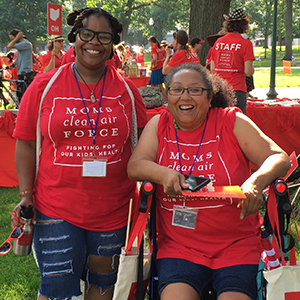


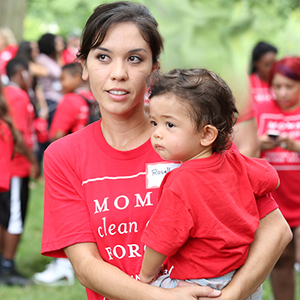


“Imagine trying hard to breathe and learn at the same time,” says Jayne Black, Moms’ Wisconsin Field Organizer and founder of Green Schools Rock. As the parent of an adult son who was diagnosed with asthma as a child, Jayne has spent decades thinking about how heat and poor air quality can trigger asthma, impair cognitive function, and reduce concentration in the classroom.
Tell Congress: Protect Our Ability to Prepare for and Recover From Severe Weather Threats
This summer, with wildfire smoke once again blowing into her town from Canada and a June heat wave with heat indices topping out at 111 degrees, her advocacy in local schools ahead of the new academic year has felt even more urgent. She decided to partner with the climate organization Impacts US to provide free, simple-to-use heat sensors to as many teachers as possible in Wisconsin school districts. She hopes the devices will bring awareness to how heat in a classroom environment can affect students’ health and learning.
The heat monitors will provide teachers and advocates with concrete, potentially transformative data showing heat trends in individual classrooms, Jayne explains. She is prioritizing monitors for schools in high-risk areas, particularly those near pollution sources like the Oak Creek and Valley coal plants outside Milwaukee, just a few miles from local elementary schools. Students in these areas face the compounding health threats of high temperatures plus industrial pollution of their air and water.
She’ll use the data collected from the monitors as evidence when she advocates for needed changes and safer school protocols, from putting in ceiling fans and planting trees to shade the building to improving classroom ventilation and installing cool rooftops that reflect sunlight, reducing a building’s heat absorption.
“Your voice matters,” Jayne says, urging parents to directly engage with school administrators, teachers, and superintendents as she has. She encourages forming connections with other parents, sharing knowledge, and presenting a unified front to schools—because when parents unite, their voices are amplified and more convincing.
So, what can parents do? First, become familiar with how indoor air quality and extreme weather can impact student health and learning. Both have been linked to behavioral disorders, learning differences, and increased absenteeism, as well as to triggering asthma attacks, headaches, fatigue, nausea, and rashes.
Then, decide what initiative you want to bring to your school administrator, superintendent, or school board. Beyond heat monitors, here are some examples of policies parents can ask schools to adopt to protect children from extreme weather, air pollution, and toxic chemical exposure:
Create an extreme heat protocol: Schools can establish clear protocols for managing extremely hot days, including provisions for sufficient hydration, adequate cooling systems, and possibly adjusting class schedules to avoid peak heat times outdoors.
Plan for poor air quality days: Schools can use tools like AirNow.gov to monitor outdoor air quality, especially on high-risk days. This data should factor into decision-making about limiting outdoor activities when air quality is poor and ensuring students with respiratory conditions have the extra support they need.
Make sure chemicals are managed safely: Schools can adopt safer cleaning practices, minimizing or eliminating hazardous chemicals that harm indoor air quality.
This back-to-school season, remember that ensuring child safety isn’t just the school’s responsibility; it’s a community effort. Parent and caregiver advocacy like Jayne’s can truly transform classrooms into healthy learning environments, safeguarding not just today’s students but also generations to come. Every child deserves the opportunity to breathe easily, learn effectively, and thrive.
Tell Congress: Protect Our Ability to Prepare for and Recover From Severe Weather Threats