



“What’s in the Air” is a column by Dominique Browning, Moms Clean Air Force Co-Founder and Director, in which she explores life today through the lens of air quality and public health.
There are moments in life when I am awed, struck dumb, by the achievements—and not the depredations—visited on the world by humankind. I stand in front of certain paintings, sculptures, and feel the wonder of an artist’s imagination and craft. I gaze at a bridge that spans nearly a mile over a raging fjord and marvel at human engineering.
In the ’70s, I walked across slabs of marble polished by centuries of sandals, the floor of an iconic temple built in 447 BC, dedicated to Athena, the goddess of wisdom and war. The Parthenon. A symbol of Athenian democracy. I wept at the architectural wonder of it, at the idea that my feet were touching the same floor as some of the world’s most brilliant minds did ages ago; I wept to be momentarily connected to the unfolding of human civilization—just as I wept when I came to understand slavery in ancient Athens.
And then there’s Stonehenge, a prehistoric stone circle built about 5,000 years ago. When I visited, near the time of the summer solstice, visitors could still wander through the giant henges of stone or stand in awe in the circle, imagining a Bronze Age community coming together for a summer ceremony.
On the other side of the scale: Humans have wrought terror on one another. We have carried devastation and disease across oceans, sprawled across landmasses with evil intent. In our modern times, we are witnessing the willful blindness of corporations whose pollution is disrupting the planetary atmosphere in which humans have thrived for little more than 10,000 years. Or corporations whose products are literally poisoning people.
Tell Congress: Commit to Climate Investments and Clean Air Progress
Of course, the burning question is, What will it take for companies to take responsibility? What will it take for democracies to harness the considerable prowess of their people to put an end to the reckless pollution?
Some climate activists believe that it is necessary to startle, or outrage, people out of their complacency about climate pollution by vandalizing the treasures of human civilization. I disagree, passionately. It is those very treasures—paintings, sculptures, monuments—that remind us of all the good in us, all that we are capable of achieving, on however a flawed, fitful path.
Vandalism hurts our cause, I think. Whose mind will be changed because a painting in a museum is slashed and ruined? Who is going to watch orange cornstarch being sprayed over Stonehenge and think, gee, climate change is bad and so… So what?
It’s much more likely that people will say, this is nuts (and worse) and therefore the whole cause is bad. And yet, I understand the desperation that underlies such actions. I often feel the terrible frustration at how slow progress is, how much more we must do.
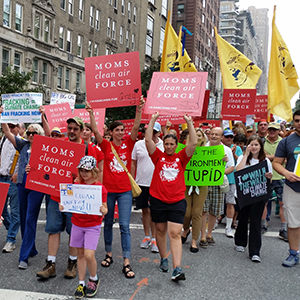
I get disruption. I get stringing a hammock in an ancient tree to protect it from people wielding chainsaws. I get chaining oneself to a fence to block entry to a polluting facility. I get protests and occupations. All this activity too is part of the wonder of the human spirit, the warrior spirit that fights injustice.
I don’t get the destruction of wondrous human achievement.
The novelist Kim Stanley Robinson—one of my favorite writers—imagines the not-too-distant world of 2025 to 2050 and opens The Ministry for the Future with a horrific scene of a heat wave in India that suffocates millions of people. In this time of climate apocalypse, he imagines the need for organized violence to bring about change. He chronicles the work of activists shooting down airplanes to assassinate world leaders to stop the burning of fossil fuels.
Right now, birds and bats are dropping out of the skies in northern India, dead from an unremitting heat wave. One can only gape in horror that we would let things get to this point. It makes much more sense to do everything we can to keep from getting to a time in which dynamite and assassination are the only sensible alternatives to forcing action.
Tell Congress: Commit to Climate Investments and Clean Air Progress