

By: Danielle Berkowitz-Sklar, Project Manager, Moms Clean Air Force
Date: July 10, 2025
About: Environmental Protection Agency Docket ID No. EPA–HQ–OAR–2018–0794
To: Environmental Protection Agency
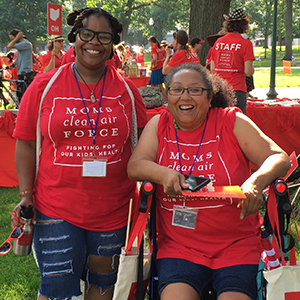
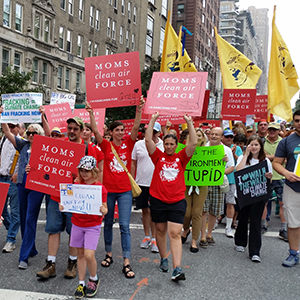
My name is Danielle Berkowitz-Sklar and I serve as the Project Manager for Moms Clean Air Force National Events and our Latino community program, EcoMadres. We are a community of 1.6 million parents and caregivers fighting to protect the health of children from air pollution and climate change.
Moms Clean Air Force has advocated for strong mercury protections for over a decade, and we strongly oppose EPA’s proposal to repeal recent amendments to the Mercury and Air Toxics Standards. There is no safe level of mercury, and that’s something my pediatrician mother taught me when I was just 7 years old.
My family lives in California and Miami, where my parents returned after raising me in Costa Rica. Having spent my earlier years in a rural coastal town in Costa Rica, I have fond memories of driving home from a morning spent by the sea and enjoying the catch of the day with my four siblings.
I vividly remember my mother, who always instilled in us an awareness of how our health is linked to the health of our environment, being cautious of the type and quantity of fish we would consume because of the risks associated with mercury exposure. As a child, I didn’t fully grasp the gravity of her concerns. Now, I understand the implications, especially since we regularly consumed fish sourced from the nearby waters.
Mercury is a dangerous and potentially deadly neurotoxin with no acceptable level of exposure in water, air, or soil. It harms vital organs like the heart, kidneys, lungs, and immune system. Mercury is especially damaging to children and infants whose bodies and brains are developing. Early exposure can impair speech, movement, and learning abilities.
To learn that in the United States, coal-fired power plants continue to be the main source of mercury, a recognized highly toxic heavy metal, was shocking.
Communities across the US are being exposed daily - especially lower-income and marginalized populations. For many households and communities, exposure to mercury is not a matter of choice. Indigenous communities, where fishing is an integral part of their culture and nutrition, face elevated risks. So do Black communities in the Southeast living under the poverty line, where subsistence fishing is common and mercury contamination is widespread.
The Mercury and Air Toxics Standards have been highly effective. Since its implementation, mercury emissions are down 86%. Other hazardous pollutants, including lead, cadmium, arsenic, nickel, and chromium have also dropped significantly, according to the EPA data.
These protections deliver vital health and environmental benefits, but work remains. Many coal plants still emit harmful levels of mercury and other pollutants that put communities in harm’s way.
In March 2025, EPA Administrator Lee Zeldin announced plans to “reconsider” the recent updates to MATS—threatening protections that would reduce children’s exposure to mercury, particle pollution, and hazardous heavy metals like arsenic and lead. Rolling back these modernized protections endangers public health and makes no economic sense.
We must prioritize the health and safety of families across the country. Moms Clean Air Force strongly oppose EPA’s proposal to weaken the Mercury and Air Toxics Standards.