

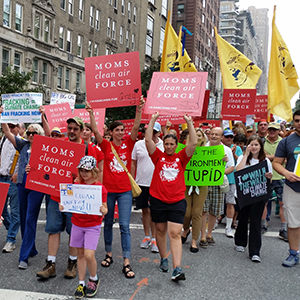


By: Cynthia Palmer, Senior Analyst for Petrochemicals, Moms Clean Air Force
Date: October 16, 2025
About: Hazardous air pollution from secondary lead smelters
To: U.S. Environmental Protection Agency
Hi – I’m Cynthia Palmer, senior analyst for petrochemicals at Moms Clean Air Force.
Given the minimal advance notice, there was not time to engage our membership of 1.6 million moms, dads, and caregivers. Instead, I am here representing the 719,303 of our members who reside in the secondary lead smeltering states.
If they were here, they would be asking you, who in their right mind would choose to expose children to toxic air pollution instead of requiring commonsense, readily available air pollution controls?
Secondary lead smelters emit powerful neurotoxins like lead and mercury….potent carcinogens like arsenic, cadmium, and dioxins….and corrosive chemicals like chlorine gas and hydrochloric acid. These air pollutants cause cancers, birth defects, respiratory ailments and developmental disorders, yet EPA is proposing to do nothing to reduce emissions.
Controlling lead emissions is a no-brainer.
Breathing lead from smelters impairs the brain of infants and children, resulting in a long list of harms.
Mercury too can wreck havoc on the brains and nervous systems of fetuses, infants and children. It is especially insidious combined with carbon in soil and water.
So as communities stock their ponds with fish, EPA will be busy stocking these same ponds with lead, mercury, dioxins, and other toxics, contaminating the fish in popular fishing spots around the country.
Pollution control technologies like wet electrostatic precipitators are efficient and effective – and are already in use at some plants -- but EPA seems to think they cost too much.
Do you realize how many American families spend all their savings and plunge into poverty because they’ve got a child who’s sick with cancer?
We are all for PRUDENT financial policy in our government.
But nickel and diming on air pollution control equipment does not make economic sense.
We also urge fenceline air monitoring, which is more than a tool to tell people what they are breathing. These monitors can be integrated with public alert systems and with root-cause analysis and mandatory corrective actions, so that they identify the hazards, mitigate the risks, and prevent chemical fires, leaks and explosions. Talk about smart financial savings…
And finally, EPA is proposing to add a “de minimis” exemption for two dangerous pulmonary agents. We are appalled by this proposal, which is at odds with the Clean Air Act.
It’s not OK to pretend that small amounts of super-toxic chemicals don’t count or are somehow meaningless – such logic only makes sense in the context of chocolate chip cookies, where the crumbs definitely do not count.
THANK YOU.