


Full text
This resource has been factchecked by policy experts, using the latest scientific research. Find all our sources linked below.
Climate change is real. And it is dangerous.
Climate change is causing more wildfires and more extreme storms.
It is also harming our health.
Climate change is a major threat to the health of people with asthma.
People with asthma will have a harder time as the world gets warmer.
More than 24 million Americans have asthma. That includes more than 6 million children.
Certain things in the air like pollen and smog can trigger asthma attacks. Climate change will make those asthma triggers worse.
The good news is we can take steps right now to protect our health.
WHAT IS CLIMATE CHANGE?
A blanket of gases, called the atmosphere, surrounds our planet. For millions of years, the blanket was made up of naturally occurring greenhouse gases.
These gases trapped sunshine and released just enough heat to keep temperatures here on Earth comfortable for human life. The atmosphere has been like a perfect blanket, able to keep humans comfortable on Earth.
About 200 years ago, the atmosphere began to change.
Factories and large farms, and eventually trains, ships, cars, trucks, airplanes and power plants, began to send up into the air larger amounts of greenhouse gases. Levels of gases such as carbon dioxide, methane and nitrous oxide began rising.
Now there is too much heat-trapping gas in our atmosphere. Our planet cannot cool off. That’s changing our weather patterns.
Think of what happens when you leave your car in the sun, with the windows rolled up. Heat gets trapped inside. That is what is happening to our world.
WHAT IS CLIMATE CHANGE DOING TO THE EARTH?
Average temperatures are rising. Heat records are breaking, all over the world.
Global temperatures have warmed about 1.5 degrees Fahrenheit in the past 100 years. That may not sound like a lot, but it makes a big difference.
We are seeing more heat waves, storms, and droughts as a result of this change.
Climate change also affects the oceans.
Because of the carbon dioxide in the air, ocean water is becoming more acidic and that is harming the shells of many sea creatures.
Sea levels are rising because ocean water expands as it warms, and because glaciers and ice sheets are melting.
Coastal towns are already experiencing regular flooding for the first time in history, and places like Miami are threatened by flooding bubbling up from underneath their limestone bedrock.
A TOP ASTHMA DOCTOR SOUNDS THE ALARM
Pollen levels are climbing higher, says Dr. Jay Portnoy, director of the Division of Allergy, Asthma & Immunology at Children’s Mercy Hospital in Kansas City, MO, and past president of the American College of Allergy, Asthma & Immunology.
“Pollen counts never used to cross the 1,000 mark in spring time. But now we see three straight months where pollen counts are over 1,000 every single day,” he says.
High levels of pollen and fungi bring about more coughing, wheezing and shortness of breath, particularly during outdoor activities.
Rising levels of heat and carbon dioxide are to blame.
“Climate change is the cause. As individuals, as community members and citizens, we should take action to protect our planet and health,” Dr. Portnoy says.
HOW DOES CLIMATE CHANGE AFFECT ASTHMA?
Pollen
When carbon dioxide levels rise, some trees and plants make more pollen, and the pollen is more potent. Warmer weather allows trees and plants to start making pollen earlier in the season.
Heat
Heat waves are becoming more common. Heat waves can lead to deaths among the elderly and those who are already sick. Heat waves also trigger asthma attacks.
Smoke
Climate change is making wildfires worse. The smoke from wildfires can spread hundreds of miles. For asthma sufferers, wildfire smoke can trigger symptoms.
Mold
When plants are surrounded by high carbon dioxide levels, they develop mold spores that are more powerful. Climate change also increases severe weather events such as storms, flooding, and heavy rainfall. Damage to homes, schools, and other buildings could increase indoor mold. Whether indoor or out, mold triggers asthma.
Smog
Smog, or ground level ozone, is a powerful lung irritant formed when chemicals from power plants, cars, natural gas drilling, and other sources mix with heat and sunlight in the air. More heat equals more smog, especially in large cities.
STAY HEALTHY
Follow your Asthma Action Plan developed with your doctor.
Know your asthma triggers to prevent symptoms.
Check pollen counts and air quality information routinely online, on TV, on the radio, or in the newspaper.
Adapt your daily routine to avoid allergens and pollution if possible.
WHAT YOU CAN DO
Although climate change already is underway, we can help slow it down.
Use Less Energy
Electricity is part of modern life. Most electricity comes from burning coal and natural gas. Burning these fossil fuels contributes to air pollution and climate change. Drilling and transporting these fuels also are sources of the problem.
Use less energy to help improve air quality, reduce asthma triggers and help slow down climate change.
Here are some ways to help:
Seal and insulate your home to save energy.
Set your thermostat a bit cooler in winter and warmer in summer.
Replace old light bulbs with energy efficient bulbs. They use less energy, last longer, and save you money.
Turn off lights, computers, TVs, and other appliances and unplug when you are not using them.
Take it a step further:
Select the cold water option when washing clothes.
Check with your utility to see if you can switch to solar or wind power.
Have solar panels installed on your roof. Learn more here: http://energy.gov/energysaver/planning-home-solar-electric-system.
Drive Smart
A major source of air pollution in many communities is traffic. Pollution from cars, buses and trucks also contributes to climate change.
Reducing traffic can improve air quality and help slow down climate change.
Here are some ways to help:
When driving, stay at or below the speed limit.
Don’t idle your engine when your car is parked. If you will be idling for 30 seconds or more, turn the car off. It will save you gas.
Check your tire pressure regularly.
If you can: Drive less. Carpool. Take the bus. Ride a bike. Walk.
Take it a step further:
Stop cars and buses from idling their engines outside your child’s school.
Find out if your child’s school bus has a dirty diesel engine. If so, talk with your school district about controlling diesel pollution.
Before buying or leasing a car, consider fuel efficient vehicles. Vehicles with better gas mileage cause less pollution.
USE YOUR RIGHTS AS A CITIZEN
Tackling climate change is a big job.
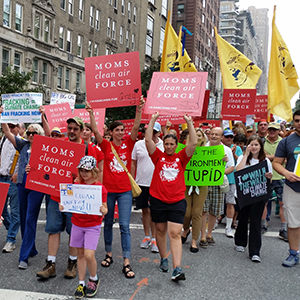
We need government officials to enact large-scale solutions. You can help make that happen.
Speak up for better laws and policies!
Your mayor, your city councilmembers, your state representatives and senators, your governor, your U.S. representatives and senators – they all work for YOU.
Make your voice heard.
Talk with government officials about why you care about asthma, air pollution and climate change. It’s not as tough as it sounds:
First, know who your government representatives are. Find out here: https://www.usa.gov/elected-officials.
Call your lawmaker on the phone. Tell them or their staff why you care about asthma, air pollution and climate change. It only takes a minute.
Write an email or letter to your elected officials.
Vote. Lawmakers represent you!.
Write a letter to your local newspaper explaining why you care. Government officials read news sources carefully.
Connect with others working on these issues in your community.
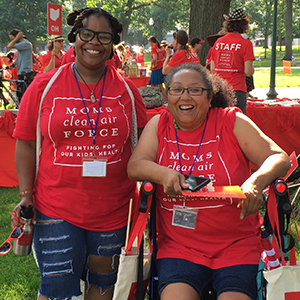
Join Moms Clean Air Force. www.MomsCleanAirForce.org
Join Allergy & Asthma Network. www.AllergyAsthmaNetwork.org
BUSY PARENTS CAN FIGHT FOR CLEAN AIR
Julie Novel had her hands full already. A working mom in Columbus, Ohio and regular volunteer at her church, Julie also has a child with “wildly unpredictable” asthma.
Then, a woman from church told her about Moms Clean Air Force. It sparked something in Julie. “Most people I know have children with asthma and more of these children are going to suffer because of climate change.”
So she got involved. With help from Moms Clean Air Force, Julie wrote letters to her local newspaper and joined a news conference in Columbus, the state’s capital.
“It doesn’t take much time to write a letter or read a short article,” says Julie. “Especially on something like clean air. If I can volunteer to serve the poor, I can volunteer for clean air.”
Together, we can protect our lungs and our climate.