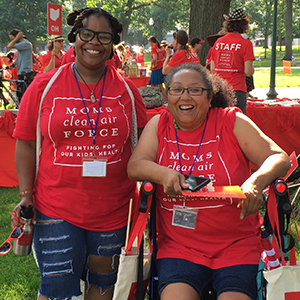

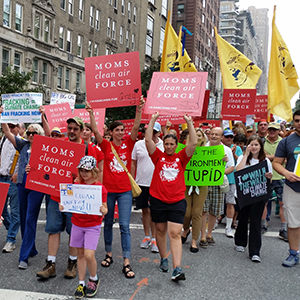

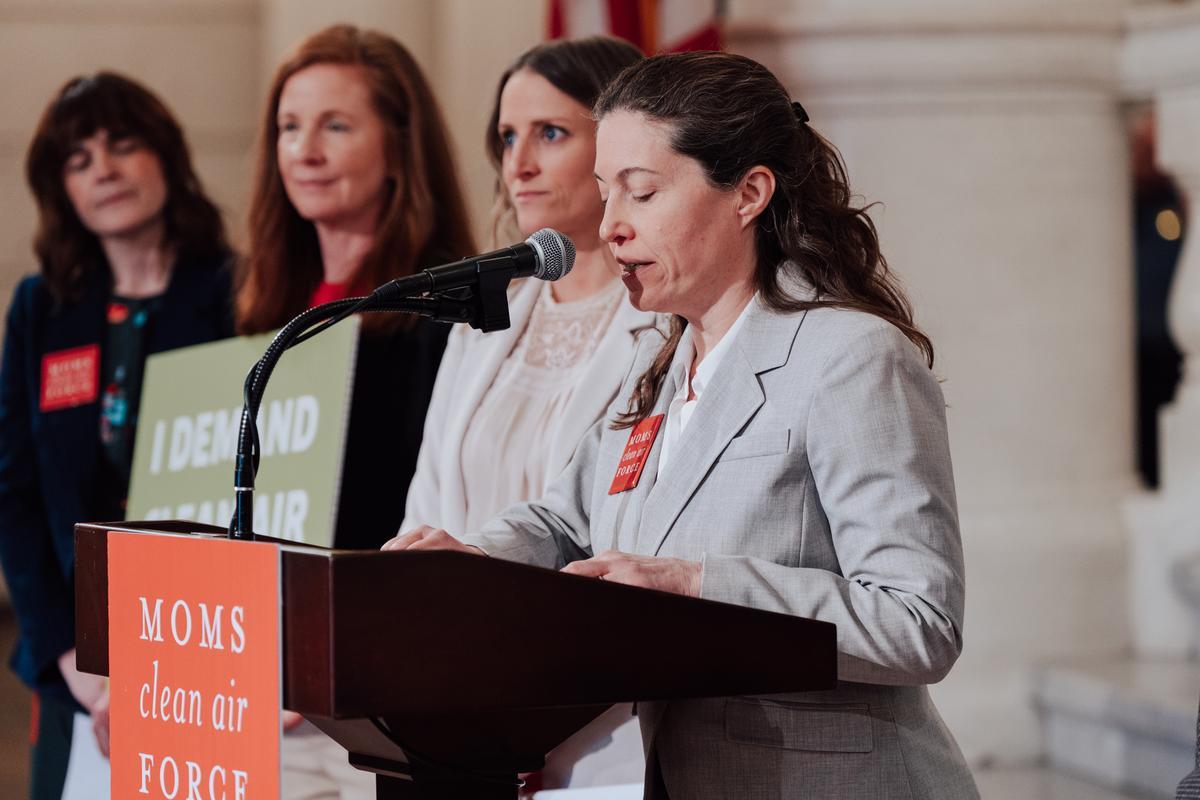
Earlier this week, Moms from Georgia to California spoke out at a virtual EPA hearing about a new proposal to exempt “advanced recycling” plastics incinerators from Clean Air Act pollution protections. This proposal is a gut-punch to all who care about clean air and children’s health—because “advanced recycling” is neither advanced nor recycling. The proposal would allow toxic plastic incineration facilities to blanket nearby communities with air pollution linked to cancer, birth defects, reproductive system damage, developmental issues, cardiovascular problems, respiratory impairment, hormonal irregularities, and neurological problems.
Tell EPA: Our Families Need Strong Protections From Plastics Incinerators
Moms have been sounding the alarm about “advanced recycling” in our communities for years. Many of these facilities use “pyrolysis,” a heavily polluting technology that incinerates plastic trash at high temperatures, turning it into harmful air pollution and chemical wastes. Pyrolysis facilities that burn plastic are wreaking havoc on families, threatening our health and our communities, as the stories Moms’ members shared during the hearing showed. Here are a few of this week’s most powerful and relatable testimonies.
Amanda Rowoldt, Ohio
“About a year ago, I visited a facility that uses pyrolysis to incinerate plastic waste in Licking County, near the Village of Hebron. On my first visit, I could see billowing black smoke from miles away. When I arrived, I sat in my car, rolled down my window, and took a video. Within minutes, I felt a wave of nausea come over me, a stinging headache, and dizziness. I was legitimately frightened for my health.
“As someone who recently battled cancer and is still enduring treatment, I was alarmed by the quick onset of negative physical symptoms. I immediately rolled up my window and drove away… It’s absolutely essential for the health and safety of Ohioans living near pyrolysis incineration facilities that pyrolysis stays under the purview of Clean Air Act pollution controls, monitoring, and reporting requirements.”
Barbara Weber, California
“We have already seen what happens when communities are faced with these facilities. In Rohnert Park, California, a company proposed a so-called ‘advanced recycling’ plant … just a short distance from a high school. Residents (many of them parents) raised serious concerns about toxic emissions, including benzene and heavy metals, and the risks to children’s health. After months of public outcry, protests, and thousands of comments, the company ultimately withdrew and left the state altogether.
“What this example shows is that when communities are informed about pyrolysis, they overwhelmingly reject it. Families do not want these polluting facilities near their homes, schools, or neighborhoods.”
Read Barbara’s full testimony.
Kiya Stanford, Georgia
“Seeing where these plants are commonly located is deeply personal and incredibly disappointing. As a Black woman who has lived in communities disproportionately exposed to air pollutants, I recognize this pattern all too well. Nexus Circular already operates an ‘advanced recycling’ plant in Atlanta in a community that is 94% people of color and 44% low income. Their proposed McDonough facility sits in an area that is 75% people of color and 37% low income. When we talk about these facilities exacerbating health outcomes, we are talking about real people in my community who are already at a disadvantage simply because of their zip code. This isn’t just a policy shift; it’s an environmental justice crisis.”
Lani Wean, West Virginia
“There are several ‘advanced recycling,’ or plastic-burning facilities proposed in my home state of West Virginia. The one closest to me is currently being built right across the street from a high school, local library, outdoor sports facilities, health center, and down the road from another chemical plant in the area…
“Families in this area already face generations of harm from petrochemical pollution. ‘My child already has severe asthma; we can’t stay if this will make it worse.’ ‘How am I supposed to ever sell my house when it’s near a plant like this?’ ‘I don’t drink the water or go outside when the air is bad.’ These are all things I have heard from community members regarding pyrolysis plastic-burning facility proposals—and I know firsthand that they are not uncommon. Soon after moving to the Kanawha Valley, I was diagnosed with asthma—something my pulmonologist said is ‘unfortunately very normal’ in this state.”
Rachel Meyer, Pennsylvania
“Because I live near a facility that produces plastic, I have become acutely aware of its air pollution and the toxicity of plastic. I worry how both could be impacting my six-year-old daughter’s health. There are more than 16,000 chemicals found in plastics. Over a quarter of these chemicals are known to be toxic while most of the rest—more than 10,000 chemicals—have not even been tested for toxicity and may also be causing harm…
“Because plastic waste is piling up all around us, industry has come up with a scheme to visibly make plastic disappear from sight by pyrolysis incineration, deceptively branded as ‘advanced recycling.’ Plastic pyrolysis incineration facilities do not lessen the plastic pollution problem. They take plastic waste and burn it, polluting the air with PFAS, dioxins, and other chemicals and creating hazardous waste. Pyrolysis plastic waste incinerators are hardly turning old plastic into new plastic. According to a study on recycling techniques for common plastics by U.S. Department of Energy scientists, only between 0.1% and 6% of the plastic waste that goes into a pyrolysis facility ends up in new chemicals or plastic.”
Tell EPA: Our Families Need Strong Protections From Plastics Incinerators