

My Climate Job is our series about careers in fields that fight climate disruption or are impacted by the climate crisis.
Christopher Morris has spent much of his career photographing what humans do to one another. As a contract photographer for Time, he traveled the world documenting war and political unrest. After the Gulf War, he photographed burning oil fields in the Middle East. Seeing firsthand what war can do to the land helped change the way he sees the natural world.
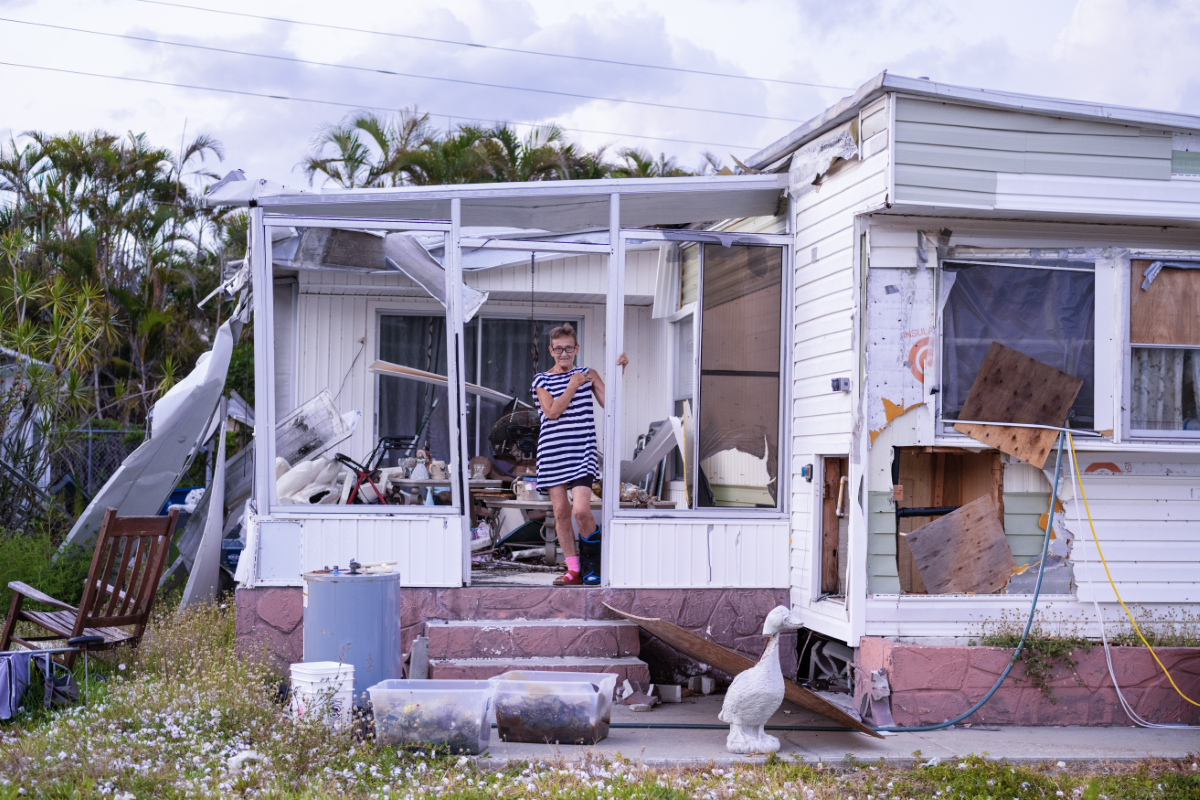
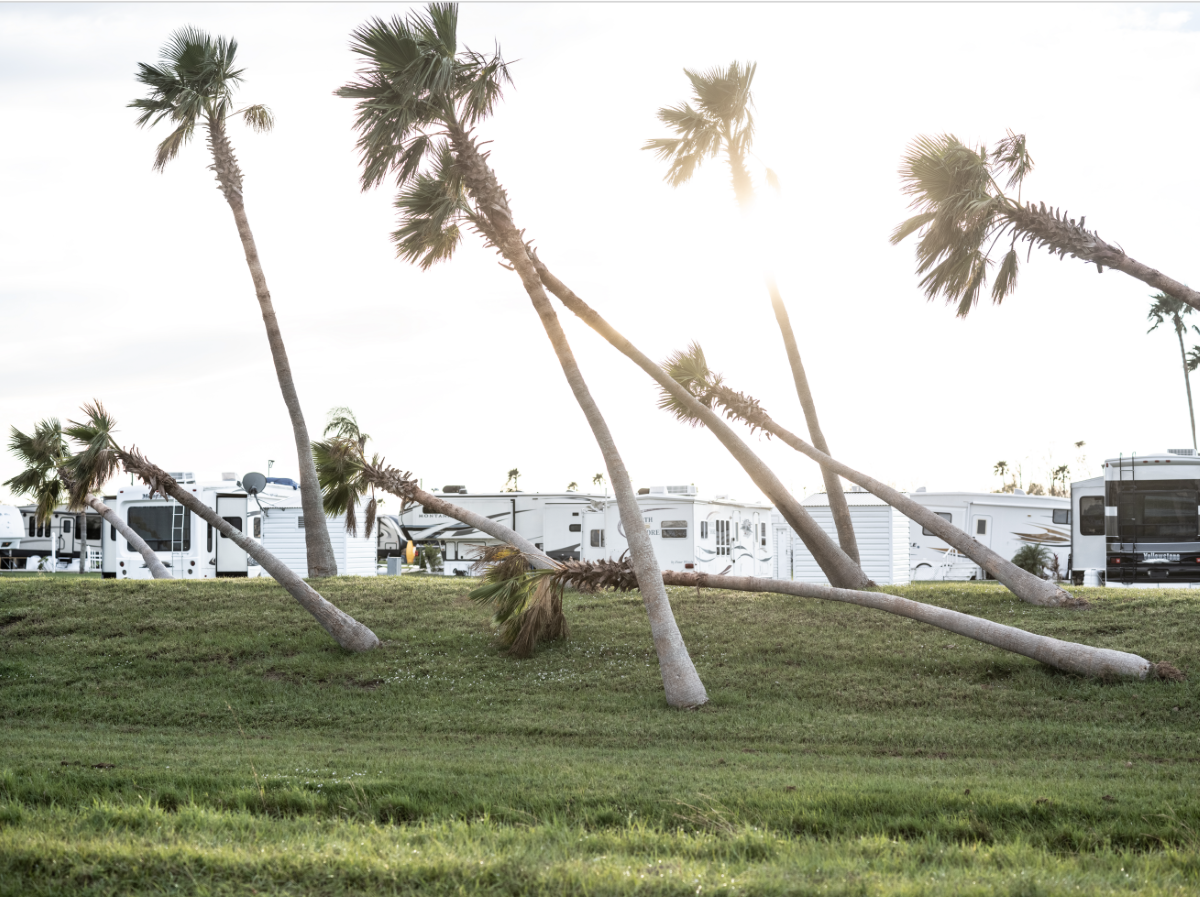
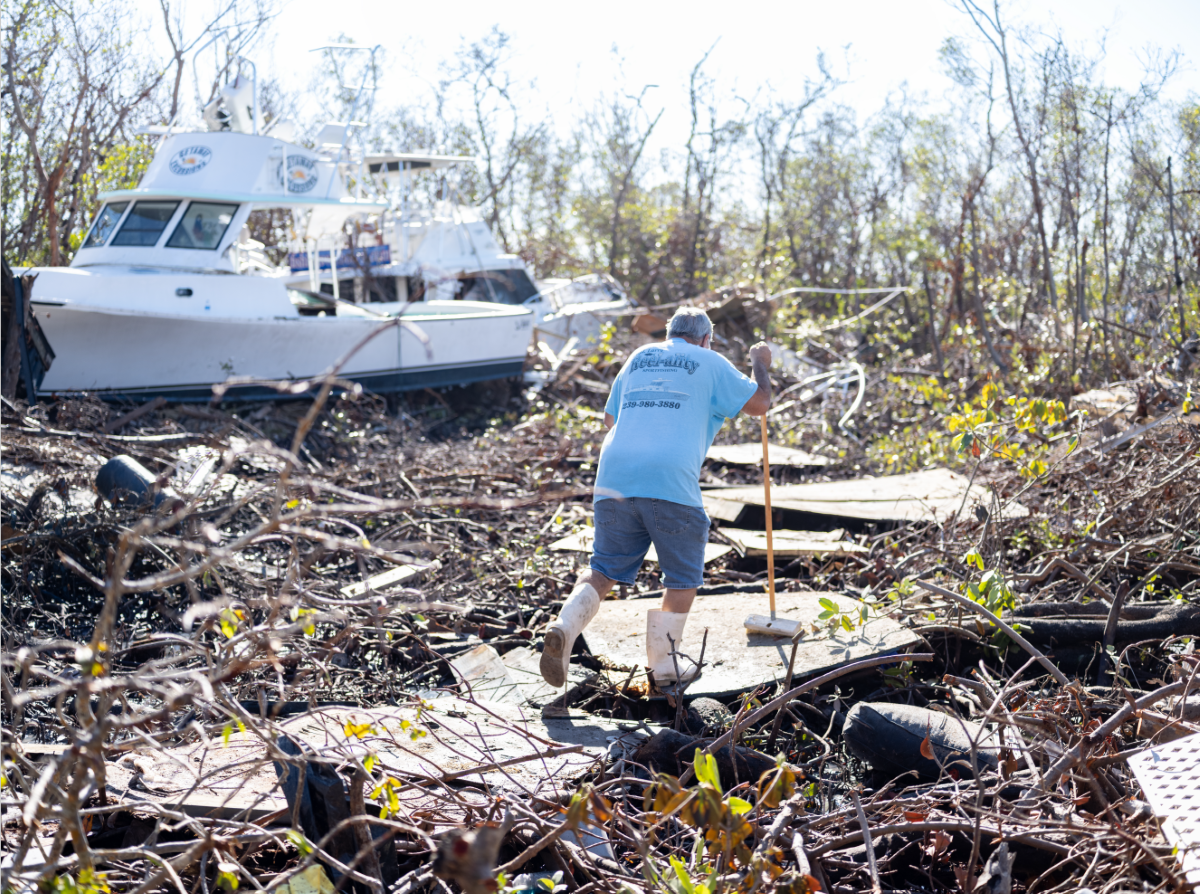
Decades later, Christopher began documenting a different kind of devastation much closer to home. Back in Florida, where he grew up, he photographed hurricanes and the people affected by them. The emotional strain of capturing photos of survivors standing among the remains of their homes and communities was so intense that Christopher now focuses his camera on the land itself.
Tell Congress: Support Mental Wellness Resources for Communities Facing Weather Disasters
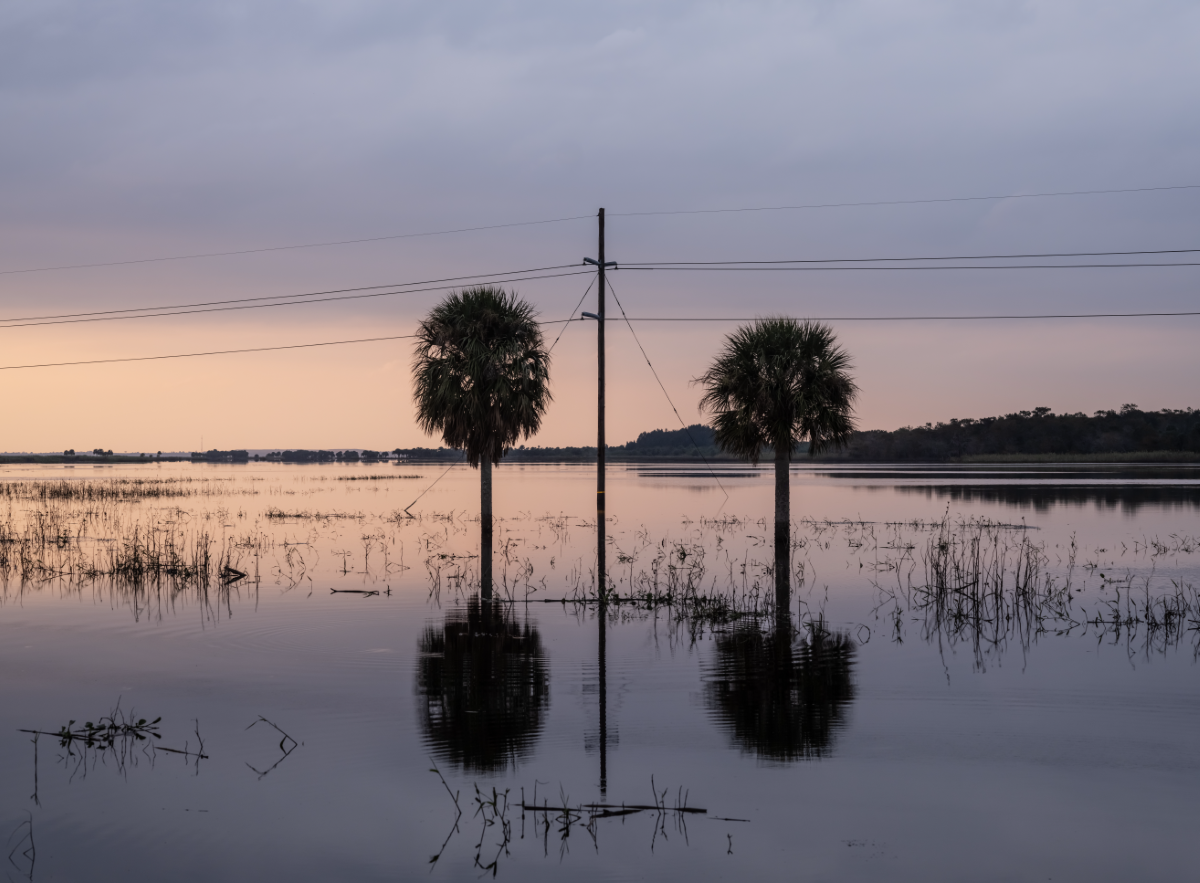
He photographs what’s currently happening to the landscape: wetlands disappearing beneath development, century-old trees cut down for construction, flooding, and storm damage. This work includes a long-term project documenting climate change in Florida, part of a larger effort photographing its impact across the United States.
We spoke with him about his work—what it means to document climate disaster in the place he calls home and why he believes photography can help people see human connections to the land in a new light.
What do you do day-to-day as an environmental photographer?
I document daily. If I don’t have my real camera, I carry my phone and I document with that. If it’s really important, I mark things and geotag, and if it’s really good, I’ll go back and photograph. The environment and what I see is a never-ending struggle.
They’re always digging up the street somewhere. I’ve got this oak forest, and all of a sudden, some cranes have come in, and they bulldoze them down. Now you’ve got 100-year-old trees lying on their side. I photograph it. I’m basically a visual anthropologist, and I’ll be till I die.
Did photographing war change your connection to our environment?
It breaks me, especially the tragedy of it, but I see how we flaunt our ugliness, especially toward nature and animals. I can’t kill ants, mosquitos, spiders. And it happened to me in war. When I used to get pinned down, and I’m talking where you’re hugging earth because somebody’s trying to kill you, your sensitivity becomes so focused because you realize you’re going to die here. And all you’re focusing on is a blade of grass and maybe a dandelion, and you see an ant crawling by or a butterfly fly by or a bird sitting above you, staring at you down there on the ground. You enter their world. You enter into your own mortality, and you feel like one with the land.
How has the focus of your work changed over time?
[At first] it’s the act of getting out of your car with a camera, and you’ve got somebody in their yard that’s just survived a hurricane. They’ve just survived, but they’ve lost everything. And you show up with the camera. To take their picture?
I reached the limit. So that’s where I fell into the land. I realized it was a struggle between man and his desire to be so close to nature that we smother it with concrete. And nature comes back every year.
What’s it like to photograph a hurricane?
I covered Katrina. I covered 15 hurricanes. I have to follow the eye and try to get close and park. There are places you have to position yourself with the vehicle, and you monitor how the winds change, but the thing is the storm surge. The water comes through. It’s like being in the Colorado River with all your house belongings and you’re trying to get the cat.
People don’t realize—you think you can ride out the storm surge. You don’t ride out a storm surge. It’s not like what you think it is. Once the water penetrates the house, you’ve got like 30 seconds, maybe a minute, to get up into the attic. And if you get up into the attic, you better have a battery-operated chainsaw to get yourself out of the attic, because it comes in fast.
Is it challenging to be recognized for documenting disasters?
I don’t mind winning awards if it’s for beauty or fashion, or even politics, but when it comes to disasters—other people’s misery? You almost don’t even want your name on it.
You’re there to visualize it, you’re not there to profit off it, off other people’s misery. You’re conveying a message.
What are you looking for when you photograph the impacts of climate change?
I want people to take away and understand that we share the planet. We share the planet with the oceans. We share the planet with the forest. And in that ecosystem is all that other life.
I’m trying to use symbolism and to pay attention. You’re walking down the street, and you look in the gutter and there’s a dead fish. It’s just a skeleton, and it’s covered in dirt and dust, and there’s a spray paint of a construction marker there. And you just stare at that fish, and you’re just like, “Well, how did he get there?”
It just makes you focus in on it. I just want people to look at the work and pay attention.
Tell Congress: Support Mental Wellness Resources for Communities Facing Weather Disasters