

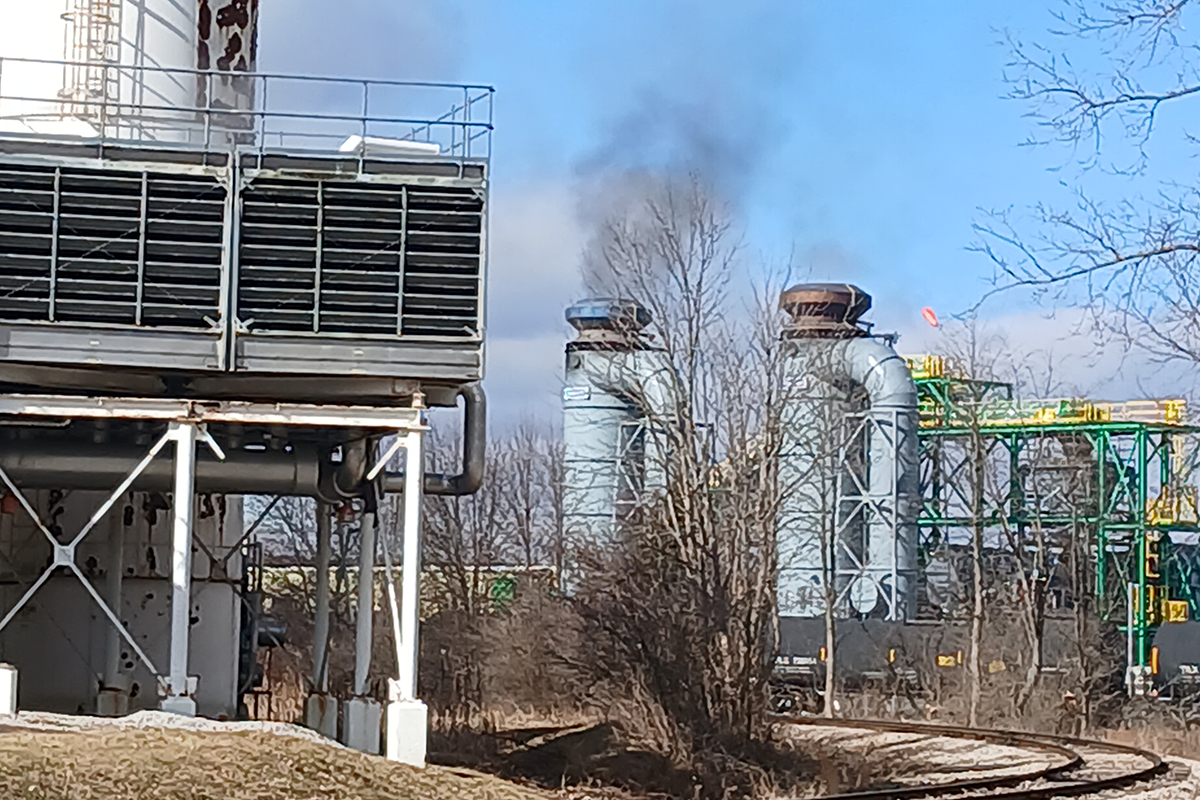
Late last year, a brand new Freepoint Eco-Systems “advanced recycling” plastics burning facility quietly began operations in Hebron, Ohio. Until recently, this 25-acre facility has received little pushback from the local community. But the tide is turning. Earlier this month, Moms’ organizer Amanda Rowoldt captured video of this facility emitting toxic black smoke into surrounding neighborhoods—a video that captured the attention of the press, a local lawmaker, and the Ohio Environmental Protection Agency.
As told to Julie Kimmel by Amanda Rowoldt:
Freepoint Eco-Systems is a chemical, or “advanced,” recycling facility located in eastern central Ohio in Licking County in the village of Hebron. What they’re doing at this plant is taking in “end-of-life plastic”—that is, plastic trash—and putting it through a pyrolysis process, which is a type of incineration. These facilities do not actually recycle anything, but they can emit thousands of pounds of carcinogens and other toxic chemicals. Chemical recycling is a false solution that does not ultimately address the plastics problem.
Tell Congress: Burning Plastic Is Not a Solution to the Plastics Crisis
Just a few minutes from the Freepoint Eco-Systems facility are homes and a village center with a cute little café. But with the amount of pollution that’s going in the air, especially on a windy day, those emissions are going far beyond Hebron and into surrounding central Ohio communities including Newark, Granville, and even my town just outside Columbus.
Moms Clean Air Force is working with Buckeye Environmental Network in Licking County to demand Freepoint Eco-Systems install emissions controls for their toxic air pollutants. On February 4, I joined Buckeye Environmental Network organizer Vicky Abou-Ghalioum for a press conference in an effort to put the Hebron facility on the community’s radar. People need to know it is causing more harm than good.
One of the reporters at the event asked, “Have you visited the facility?” I had not—yet. The question made me realize this was a missing piece in my advocacy. So I visited Freepoint Eco-Systems that very afternoon and captured footage of the stacks, which had plumes of black smoke coming out.
The plumes were troubling as were the physical symptoms I experienced immediately after arriving at the site. Within three to four minutes, I felt a wave of intense nausea, plus a headache and dizziness. The dizziness was especially off-putting because I thought I might pass out. I didn’t know if I could drive away right then, but I didn’t want to stay there. I’ve had cancer before, and I actually thought, “I’m going to get cancer again. Is this worth it?” But it was worth it to get the footage. The reality is that while I did have the opportunity to drive away, the families living there don’t.
Once I had video of the black plumes from the smokestacks, I shared it with my fellow organizer, Vicky, and she shared it with a local reporter who attended the press conference. And that’s how the story about Freepoint Eco-Systems in The Reporting Project came together. I posted the footage on Instagram as well.
The next day, February 5, I met with a local state lawmaker. I showed him the footage, and I gave him my personal experience of being there at the site—the dizziness, nausea, immediate headache. Between those two things, he wanted to take some action. He asked a staffer in the meeting with us to call the Ohio EPA that afternoon.
There was no pushback against Freepoint Eco-Systems in the beginning, not even as the facility was being proposed and built. But in the fall of 2024, shortly after it started operations, some workers submitted a complaint to the Ohio EPA about indoor air quality and working conditions. Subsequently, an OSHA complaint was filed. And now, Ohio EPA is also investigating the emissions from the facility too. They saw my video and had concerns about the opacity of the smoke. They went to the facility shortly afterward, on February 13.
There is of course more work to be done to make sure Ohio families are protected from the pollution from this facility. We will be following up with Ohio EPA as their investigation progresses. And I’ll be back in Hebron again to hear from the people there, do what I can for the community, and bring people together.
Anyone with a phone camera can take footage as I did. If there’s a similar facility near you, never underestimate how much power we have in the face of pollution.
Tell Congress: Burning Plastic Is Not a Solution to the Plastics Crisis