

This article is part of our series Life Under Threat, where we share the stories of families whose health has been put at risk by polluting industry, from oil and gas operations to AI data centers to “advanced recycling” plastics incinerators.
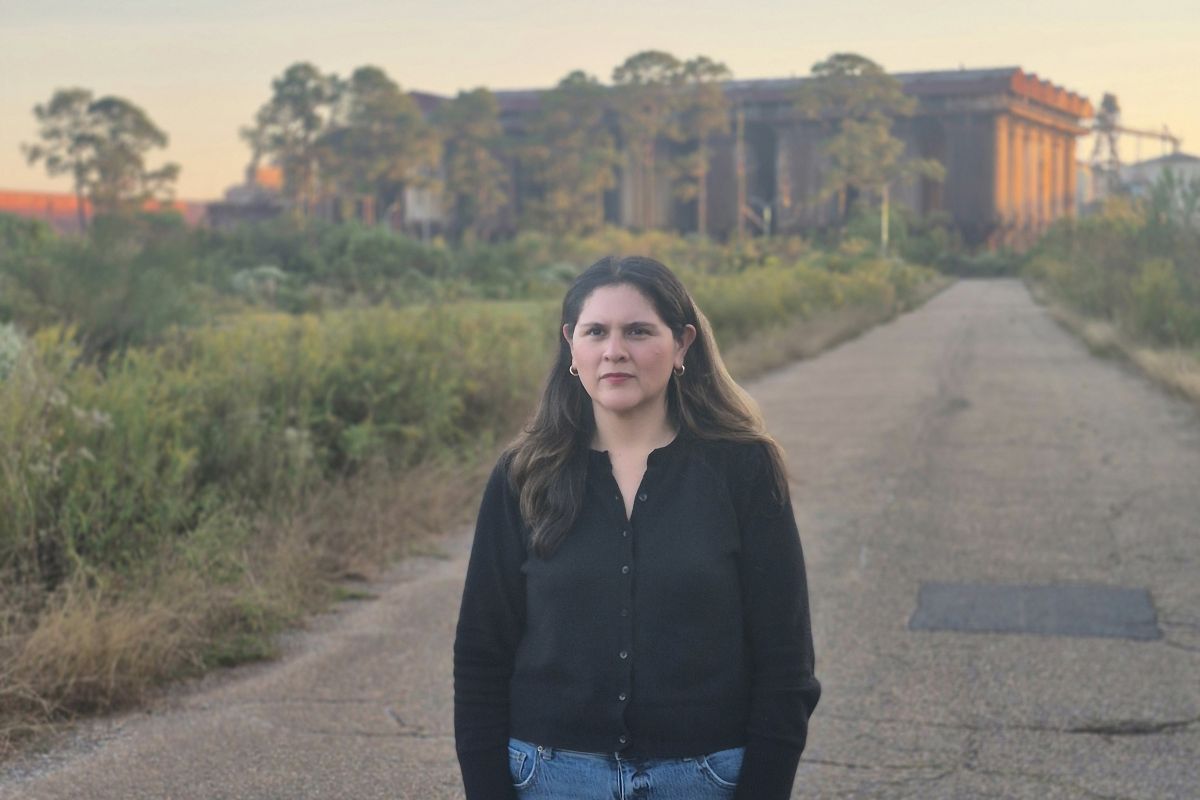
Estefania Nava Aultman never considered herself an environmental advocate. Then she learned the chemical company Air Products was building the world’s largest ammonia plant in her front yard, in Sorrento, Louisiana, just five minutes from her child’s school. Ammonia facilities like this one are popping up all over the country as the U.S. tries to boost domestic production of petrochemical-based fertilizers. They come with major pollution concerns. Breathing in even low levels of ammonia over time can cause respiratory damage, and once airborne, ammonia becomes soot pollution, which can cause stroke, heart disease, cancer, and death.
Tell Congress: Protect Families From the Plastics and Petrochemical Industry
Estefania wanted no part of this so close to her child and her neighborhood. So she got involved. This is the story of how Estefania’s community stopped this ammonia facility midway through construction.
As told to Julie Kimmel by Estefania Nava Aultman:
I live with my husband and seven-year-old in Ascension Parish, an industry-heavy area in South Louisiana. We’re about a 10-minute drive from the chemical facilities in the region that has been named “Cancer Alley.” The ammonia plant being proposed in my community was five minutes from my house and five minutes from my son’s primary school.
I found out about it through an environmental organization called Earthworks in 2024—maybe a year into construction of the facility. They had already fenced off the area and had bulldozers out. They had leveled the ground. We had seen the construction but didn’t know what was being built.
Earthworks came to a PTO meeting at our school and explained what a facility like this could do to our community. We were taken aback. I didn’t want this close to my house. Immediately, we were thinking, What can we do? How do we stop this? Is it too late? Earthworks invited us to a town hall meeting a few weeks later. A lot of people showed up, and we got to work.
Ammonia plants create a lot of pollution
I’ve seen ammonia plants. They’re very loud. They have flares that burn off by-product chemicals, so there’s air pollution. And this one was being built in my neighborhood. I thought about my quality of life, my child’s health.
I already live close to an area with some of the highest cancer and respiratory illness rates in the country. This pollution could also cause women to have premature babies. I was pregnant here. My son has autism and ADHD. I was worried the ammonia facility would have an extra effect because he can be hypersensitive.
But it’s not just health risks
Additional risks come with ammonia plants, depending on whether they’re making pellets or liquid. There could be explosions. I was concerned about whether my community would be able to respond to an explosion. We are on the outskirts of the town—kind of rural, kind of not. We have a volunteer fire department, and our closest police station is 20 minutes away. We don’t have the appropriate disaster infrastructure or trained staff.
My son’s school, with over 600 children, is on a one-way road. We can’t even get the kids home easily on a regular pickup day. Imagine if there is a leak. What is the response time between a leak and services getting there? It could be a deadly situation.
The petrochemical industry is powerful
The petrochemical industry here hires its own advocates. Every time there was a public hearing or a comment period, Air Products would send their representatives to talk up the company. The company also started a free afterschool STEM program for the kids at my son’s Title I school—the school had to put an Air Products yard sign in front of the building! They also donated money to our local elected officials.
They did all this for the optics, but they did not respond to our concerns or set up community meetings. They skipped over talking to the people and went directly to trying to buy us out. They were dumping money on the problem and trying to keep us in the dark.
The lack of transparency came from all levels. The Parish Council never held a public hearing about zoning the land or how close the plant could be to a school. We couldn’t get anyone in the government to respond to our phone calls, and we learned that our elected officials had signed nondisclosure agreements with Air Products.
The community came together to speak out
By the time we found out about this plant, many people thought, “Construction has already started. This is a lost cause, forget about it.” But we kept showing up and requesting meetings. We posted on social media to raise awareness in the community.
The parish government wouldn’t hold public hearings, but the Army Corps of Engineers and the Louisiana Department of Environmental Quality were required to for different permits. At these public hearings, Air Products would have four of their guys, and we’d have 60 of us. It was a numbers game. We wanted them to know we were watching, and the community did care.
I think they pick areas for new polluting facilities that they see as vulnerable, because they think the people are uneducated or too poor to speak out. But in Sorrento, everyone came together. It gave me hope to see people from different backgrounds sit in a room and find common ground.
The community’s voice mattered
This summer—June 2026—I read that the ammonia project was canceled. I couldn’t believe it. We fought this plant for two years, and we were able to stop it!
I think it was canceled for a mix of reasons. It wasn’t going to work financially, for one. Also, they weren’t expecting people here to put up a fight, but we did. So they decided to cut their losses.
Unfortunately, the battle to keep added pollution out of our neighborhood and away from our school is not over. We had a community meeting at the Parish Council a couple of weeks ago, and it sounds like a data center may be proposed in that same location. The good news is more people from the community are stepping into the conversation and already demanding protections for the people.
If you are facing a major industrial development in your community, my advice is to gather everyone that you can, have conversations, and get the word out. Just keep hope.
Tell Congress: Protect Families From the Plastics and Petrochemical Industry