



This resource has been factchecked by policy experts, using the latest scientific research. Find all our sources linked below.
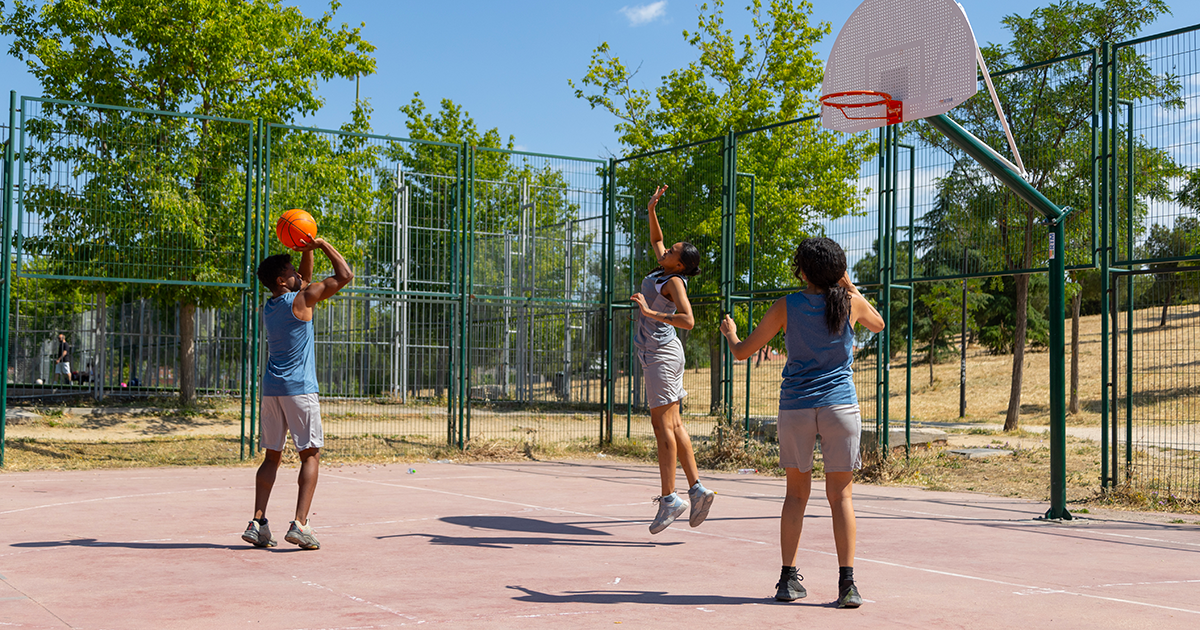
Sports are the stuff of childhood. Being active, learning to become a team player, honing skills—it’s all beneficial. But our dangerously warming planet has changed the game, increasing the annual number of extreme heat days, putting physically active kids in harm’s way.
Children’s growing bodies are already uniquely vulnerable to health impacts from climate-related severe weather, like extreme heat. When kids play sports in high temperatures as well as on days with poor air quality, they’re at elevated risk for everything from heat stroke to asthma attacks to death.
Many parents and caregivers love supporting youth sports. Today, against the backdrop of escalating extreme weather, this requires more than snacks and carpooling. Coaches and families alike urgently need to familiarize themselves with climate-related health risks for young athletes and establish action plans to safeguard their health.

Young bodies in motion and heat
Approximately 9,000 high school athletes in the U.S. are treated for heat-related illness yearly. Exercise-related heat exhaustion happens when a body can’t get rid of extra heat generated during exercise. If young people don’t drink enough fluids while working out, elevated body temperature plus dehydration can lead to collapse.
Children’s bodies don’t regulate heat as well as adult bodies; they produce more heat relative to their weight, sweat less, and adjust more slowly to heat. While any physical activity in high temperatures can place people at risk for heat-related injury, studies have shown that sports pose a specific concern, especially among children and adolescents playing football. Endurance athletes who train and compete outdoors, like long-distance runners and cyclists also face elevated risks.

Heat plus air pollution and other climate impacts
Extreme heat can worsen air pollution, adding to potential harm for athletes. Warmer weather traps greenhouse gases in the atmosphere and contributes to ground-level ozone—a key component of smog. Low-intensity exercise or indoor activities are recommended when ozone is high, as it can aggravate respiratory issues, including triggering asthma attacks.
In 2024, parents of young athletes in the U.S. estimated their children lost about a week of sports practices or competitions due not only to very hot temperatures, but also flooding, changing winters, and wildfire smoke. Because wildfire smoke is an unknown mix of ash, tiny particles, liquid droplets, and toxic gases it is a dangerous form of air pollution—and can linger for long after a fire subsides.
Artificial turf, an added risk factor
Synthetic turf, made from plastics derived from fossil fuels, is the world’s fastest-growing play surface. Some families are working to ban turf at their schools as it contains polyfluoroalkyl substances (PFAS), known as “forever chemicals” because they linger in the environment and accumulate in our bodies. PFAS has been linked to cancer, as well as to other very serious health impacts, like decreased fertility, liver damage, thyroid problems, adverse birth outcomes, and more. Turf can also contain high levels of lead, a neurotoxicant. High temperatures can cause chemicals in turf to off-gas into the air.
There are simple ways to reduce exposure to artificial turf when unavoidable, including washing hands before snacking plus sitting on benches, not the ground.

Underlying health conditions
While all children are at higher risk of heat-related illness, those with underlying health conditions, including asthma and heart conditions, are a uniquely sensitive group, especially when playing sports. Heat makes the heart work harder, which can increase the chance of heart attacks and even failure.
As there are an estimated five million children in the U.S. with asthma, young athletes with the disease may already know to take precautions in hot and humid weather, both common asthma triggers. But the combination of extreme heat and air pollution, including wildfire smoke, is especially hard on lungs. Some diseases, including sickle cell, notably higher in Black populations, also raise the risk of heat-related illness.

Health disparities in communities of color
Not all athletes face the same risks. Some states experience more extreme heat than others while others are more prone to wildfires. Black families are more likely to live in places vulnerable to weather disasters—one study reported twice the number of sports cancellations in Black communities than in white and Hispanic. Student athletes in districts that lack funding for air conditioning struggle more to compete and play than those in wealthier districts.

Take action
Parents, coaches, and school administrators can help reduce the health impacts of escalating extreme weather on young athletes. They can create heat action plans requiring mandatory checking of the HeatRisk forecast and Air Quality Index prior to practice or games during warm months. They can also establish protocols to keep athletes cool, encourage hydration, and learn the signs of dehydration and overheating. Practices and games can be scheduled for the coolest times of day outside or indoors in air conditioning, if available.
But ultimately, it’s not up to caregivers alone to ensure student athlete safety. We need effective legislation. Join Moms Clean Air Force to demand that lawmakers take immediate climate action to protect our planet and our children. Then we can focus on playing ball.
Full list of sources.
Released: November 2025